When the answers are not reliable, then our inquiries should be stronger.
We are all trying to cope with this new normal of the world. For those who are affected from COVID19, it is wearing a mask when going out, disinfecting regularly, staying at home as much as possible and avoidance of physical interactions. Maybe in some parts of our Earth, things are not as bleak, and people go on with the normalcy that they are used to, but again, this reality is quite relative.
I stumbled upon the Human Systems Dynamics Institute (HSD) either through Twitter or some other medium while I was doing research on facilitation. I received a newsletter about a weekly call they are offering every Sunday titled: In this moment: Resilience. This is the background of the call:
Please join us every Sunday for a conversation online about how to thrive in this time of turbulence and uncertainty. With a stance of inquiry, we’ll explore the tensions that are at play in this unprecedented moment. How are these tensions showing up in our lives right now? How do we see them at multiple levels of scale – in our relationships, work environments, health care and political systems, global news reports, and in our own hearts and minds? What will it take to effectively navigate the polarities and paradoxes that characterize this moment? And what if acknowledging and living in the present tension, polarities and paradoxes actually IS resilience itself?
Since I will be at home, and learning something new felt wiser than binging on Netflix or gaming on the PS4, I decided to participate and see what was this about.
For this call, there were about 11 people who joined. I was introduced to the vision of HSD and two, very interesting points.
HSD has a vision in 2050 that
People everywhere will thrive because
HSD Vision 2050
they see patterns clearly
seek to understand and
act with courage to
transform turbulence and uncertainty into a
possibility for all
My two main takeaways from this call, are the Rules of Inquiry and Dynamics of Decision Making
Rules of Inquiry
Our answers to things are certainly not reliable. What maybe true in one moment/one place may not hold true for another. When our answers are not resilient enough, then our method of inquiry should be stronger. Try replacing
judgement with curiosity
judgement: He’s difficult to work with. He always <insert something here>
curiosity: I wonder what is he going through right now?
conflict with shared exploration
conflict: We will never work out, we are too different.
shared exploration: let’s find a shared understanding and work from there.
defensiveness with self-reflection
defensiveness: Fine, it’s always my fault. You will never understand.
self-reflection: How am I relating at this moment? What needs are not being met that is causing me to react/respond in this manner?
assumptions with questions
assumptions: I don’t matter to you.
questions: I value you and you mean a lot to me, would you be able to tell me honestly how you feel?
The examples are just what I thought up on the top of my head. But I understand how it could be helpful than the former.
Dynamics of Decision Making
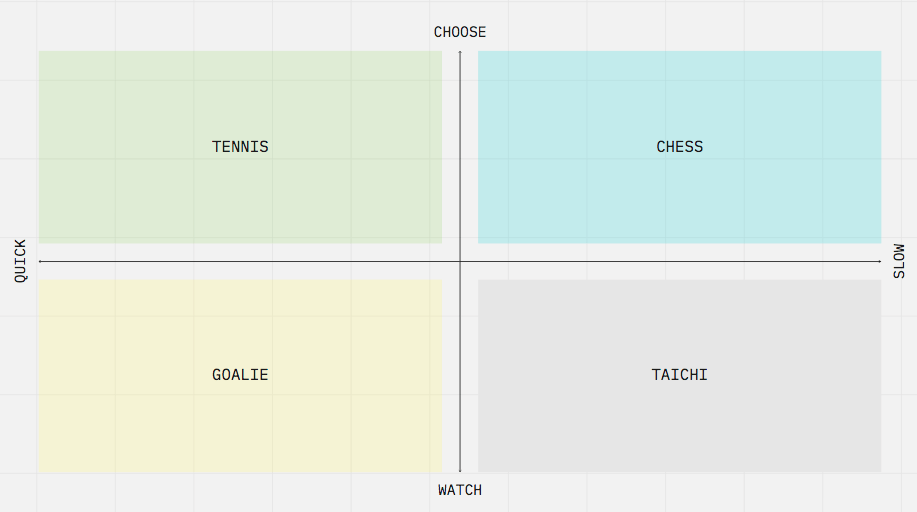
There is no right quadrant of choice. We flow through these based on the moment to moment situations we are having. There are both benefits and risks in choosing a quadrant. The important thing to be aware of is Which will I do? And when?
After doing an activity that demonstrated the 4 quadrants, we broke out into groups and talked about what pattern is most comfortable for us, what is the world calling for you today? and how can you most effectively answer that call this week?
It was an interesting thing to reflect on. And something I would like to think about as I am about to start the work week tomorrow.
I am looking forward to what will be discussed on the next session.
 Hello, I am D.