2021-02-24 HSD Asia : Inquiry Is the Answer #8

How do we decide the best direction we take where we live in a world full of information and divergent opinions?

20:41:09 From Donna Lee : Hi Donna Lee here from Tokyo, Japan
20:41:22 From Donna Lee : Please type your name and where you are from in the chat 🙂
20:41:55 From Renan Galang : hey Renan Galang From Manila, Philippines
20:42:02 From TK : Hello all. I am from India. Sorry for being late, I did not realise the Zoom link had changed.
20:42:17 From Donna Lee : Yes, Sorry about the last minute change
20:43:51 From Donna Lee : Nice of you to join us
20:45:24 From Donna Lee : https://www.hsdinstitute.org/about-hsd-institute/simple-rules.html
21:04:30 From Donna Lee : How do we decide the best direction we take where we live in a world full of information and a divergent of opinions?
21:05:26 From Donna Lee : And there are multiple ways of looking at the issue
21:05:33 From Donna Lee : ————————
21:06:45 From Donna Lee : Which direction are you going?
21:06:56 From Brent Que : What common ground can we seek in the difference?
21:07:17 From Pheisunn : What "truths" are you seeking?
21:07:34 From Donna Lee : What is the most important thing for you at this moment?
21:07:45 From Brent Que : What makes what you say true for you?
21:07:55 From Pheisunn : Why or how is the divergence upsetting?
21:08:28 From Pheisunn : Who needs to decide on the direction?
21:08:47 From Donna Lee : What do you feel when faced with a different opinion or view as yours?
21:09:25 From Pheisunn : What are the current boundaries where different "opinions" interact?
21:09:46 From Brent Que : How confident are you with your own truth?
21:09:52 From Donna Lee : What brings you peace
21:10:07 From Pheisunn : What are some ways to decide or make decisions?
21:10:35 From Brent Que : What other perspectives aren't we looking that we could have probably agreed on?
21:10:43 From Donna Lee : If there was no diverse opinions or information, what would be left?
21:11:23 From Pheisunn : If this was a storybook, how do you want it to pan out?
21:11:40 From Brent Que : How would hate be useful to keep the conversation going?
21:11:54 From Donna Lee : If this was a story, are you at the beginning middle or end?
21:12:11 From Pheisunn : What is a good place to start inquiring and understanding?
21:12:23 From Donna Lee : Who can you ask for directions?
21:12:30 From Reyna Millan-Gesmundo : How much risk are you willing to undergo to explore other truths vs. what you believe in?
21:13:14 From Pheisunn : Is there a model that worked for you? What made it so?
21:13:48 From Brent Que : What made you think your worldview is right?
21:14:08 From Pheisunn : Why do the different views have to converge?
21:14:57 From Donna Lee : what is fueling your drive to seek a direction
21:14:58 From Reyna Millan-Gesmundo : if your truth is proven to be false, how will you proceed?
21:15:18 From Donna Lee : Is there such a thing as a false opinion?
21:15:34 From Brent Que : Where can we find harmony in disagreements?
21:15:46 From Donna Lee : What would your wiser self tell you to do?
21:15:56 From Pheisunn : What would be true and useful now?
21:16:05 From Reyna Millan-Gesmundo : Will you be willing to compromise for the sake of harmony?

2021-02-10 HSD Asia : Inquiry Is the Answer Session # 7

How can we help teams to be self-managing / self-organizing when upper management has a more command and control style?

20:42:13 From Francesco Bianchi : Love the “Celebrate life” 😀
20:45:59 From Geoff Watts : is the term “wicked issues” a HSD thing? a CAS thing?
20:46:07 From Geoff Watts : Or is it a Donna thing? 🙂
20:57:57 From Donna Lee : How can we help teams to be self-managing / self-organizing when Upper Manager has a more command and control style?
20:58:11 From Donna Lee : management*
20:58:59 From Geoff Watts : I wonder how the upper management feel they are coming across
20:59:24 From Donna Lee : What have you tried so far to help this team?
20:59:45 From Francesco Bianchi : How do you personally feel about this situation?
21:00:27 From Donna Lee : What limitations do you feel you have at the moment?
21:00:48 From Donna Lee : If your situation was a song, what would the song be like?
21:00:58 From Geoff Watts : What do your instincts tell you?
21:01:27 From Geoff Watts : If you were in the position of the upper management would you be acting differently?
21:01:31 From Francesco Bianchi : How do you think management sees you?
21:01:36 From Donna Lee : How are other managers in the organization?
21:01:59 From Donna Lee : How is the team feeling?
21:02:13 From Geoff Watts : Is there anything that you might have pre-judged or assumed incorrectly?
21:02:30 From Donna Lee : What is your highest priority right now?
21:03:19 From Francesco Bianchi : What level of energy do you feel you are currently putting in this?
21:03:40 From Geoff Watts : What is going on that would make their current behaviour completely rational and logical for them?
21:03:56 From Donna Lee : How are you relating to this as an Agile Coach?
21:04:16 From Donna Lee : If there were no rules, what would you do?
21:04:29 From Geoff Watts : What do you think Donna would do? 🙂
21:04:45 From Donna Lee : What do you think Geoff would do?
21:04:52 From Geoff Watts : Ask Donna…
21:04:58 From Donna Lee : What do you think Francesco would do?
21:05:00 From Francesco Bianchi : What would you like Udo to do?
21:05:16 From Donna Lee : What you U do?
21:05:17 From Geoff Watts : Well played Francesco…
21:05:51 From Francesco Bianchi : If you could choose what last question to be asked, what would that be?
21:10:37 From Francesco Bianchi : What can you do to know?

2021-01-27 HSD Asia : Inquiry Is the Answer #6

How can I as one person, successfully work in a massive organization where the current processes in place don’t optimally address their needs?

20:41:33 From Pheisunn (PS) @Singapore to Everyone : Hi Kay, welcome 🙂
20:41:41 From Donna Lee to Everyone : Hi Kay
20:41:50 From Pheisunn (PS) @Singapore to Everyone : We've just started and doing a bit of overview.
20:42:14 From Kay to Everyone : Kay (JPN, Tokyo)
20:43:39 From Karen Zanetti to Everyone : Will we receive the slide deck? I'd love to have it as a resource.
20:44:09 From Pheisunn (PS) @Singapore to Everyone : Plus the recording will be shared/posted too.
20:57:29 From Donna Lee to Everyone : How can I as one person, change a massive organization where the current processes in place don’t address their needs?
20:59:41 From Donna Lee to Everyone : How can I successfully work within a massive organization within the team I’m team?
21:00:48 From Donna Lee to Everyone : Where the current process in place don’t optimally
21:00:51 From Karen Zanetti to Everyone : How can I as one person, successfully work in a massive organization where the current processes in place don’t optimally address their needs?
21:03:06 From Oon Kean Lin to Everyone : What do you think they are optimised for ?
21:03:32 From Pheisunn (PS) @Singapore to Everyone : What bothers you most about the situation?
21:03:43 From Donna Lee to Everyone : What have you started?
21:04:11 From Pheisunn (PS) @Singapore to Everyone : What are the differences/gaps that you can leverage on?
21:04:21 From Donna Lee to Everyone : What is working well in the organization right now?
21:04:52 From Pheisunn (PS) @Singapore to Everyone : Who can you bring in to work together with on this?
21:04:52 From Maiko @Tokyo to Everyone : Is there any mate to work effectively with you as internal partner.
21:05:10 From Oon Kean Lin to Everyone : How does successfully work looks like for you ?
21:05:18 From Donna Lee to Everyone : Who are your allies? Who are your enemies?
21:05:33 From Kay to Everyone : What are the goood impacts and bad impacts by optimizing them.
21:05:56 From Pheisunn (PS) @Singapore to Everyone : Who needs this to be successful?
21:06:06 From Donna Lee to Everyone : If you were to draw a picture the current situation, what does it look like?
21:06:48 From Pheisunn (PS) @Singapore to Everyone : Who else feels/thinks that the proceses are a problem?
21:06:56 From Donna Lee to Everyone : What stories have you heard about the organization so far?
21:07:16 From Pheisunn (PS) @Singapore to Everyone : What's keeping the current processes in place?
21:07:22 From Donna Lee to Everyone : How are you relating to this wicked issue?
21:07:31 From Maiko @Tokyo to Everyone : IF you do not work for the organization, what will happen in future.
21:08:06 From Donna Lee to Everyone : If you were to see this organization again in 5 years what would they look like?
21:08:40 From Pheisunn (PS) @Singapore to Everyone : Where might you start - in parts?
21:08:50 From Oon Kean Lin to Everyone : What is the organization’s evaluation of itself ?
21:09:11 From Pheisunn (PS) @Singapore to Everyone : What might push them to want to change?
21:09:20 From Donna Lee to Everyone : What are the people saying ? The leaders? The employees? What surprised you?
21:10:03 From Donna Lee to Everyone : What needs are not being met?
21:10:08 From Pheisunn (PS) @Singapore to Everyone : Who defines or decides on what is optimal?
21:10:22 From Donna Lee to Everyone : What is the most important need that you feel should be addressed?
too short
21:28:11 From Donna Lee to Everyone : I can also relate to this haha
21:28:19 From Donna Lee to Everyone : This is also my current situation
21:29:55 From Donna Lee to Everyone : https://www.hsdinstitute.org/resources/landscape-diagram.html
21:32:12 From Donna Lee to Everyone : https://wj309.infusionsoft.app/app/page/inquiry-is-the-answer-covid-19?cookieUUID=0df95e81-ba58-4ef8-a27c-190f3919cc53

Dhal Curry with Homemade Curry Powder

We’ve all been handling this interesting normalcy that we have at the moment in different ways. Working out, watching Netflix, horticulture, buying boxes, learning a new hobby or skill, cleaning and tidying untouched areas of your house ala-Marie Kondo, and cooking.

I have probably gone through most of that list (even the boxes). But what I decided to try was making my own curry powder. On my last trip to Sri Lanka, I procured a set of spices and curry powders to make my own Sri Lankan style curry at home. That was back in February. As my supply of curry powder is depleting faster than you can say Ayubowan, and the prospect of going back to Sri Lanka seems a bit dim at the moment, I researched online to find a recipe for raw curry powder (Thuna Pana).

With the assistance of Island Smile’s recipe, the power of Amazon and my insane curiosity with how curry powders are made, I was able to make it myself.

Making it was one thing, how it would taste like was another. So I followed the instructions for Dhal Curry from the chef I talked to in Sri Lanka, omitting their ingredients and replacing it with mine, and the end result was pretty much similar.

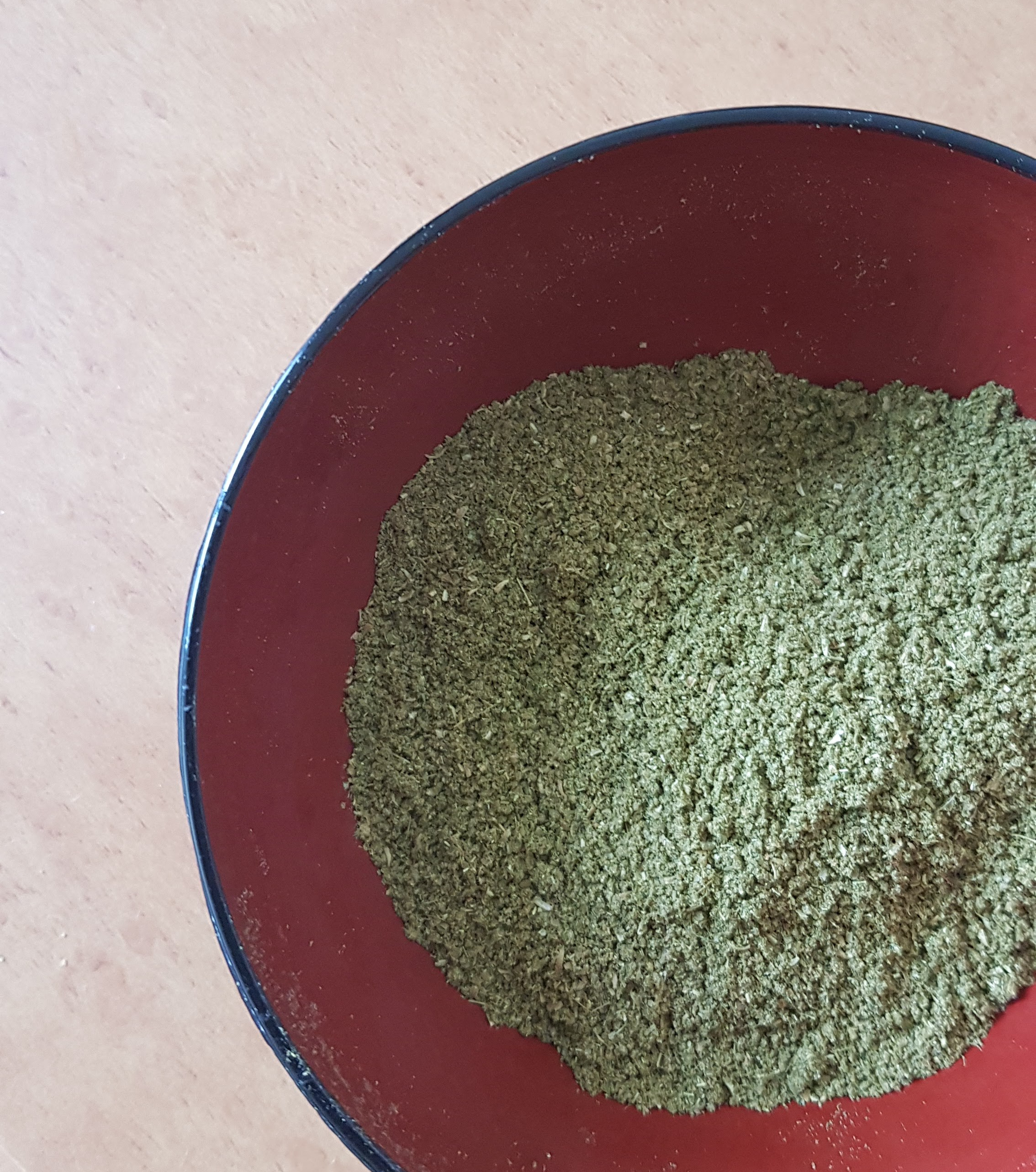
Raw curry powder. You heat up the spices a little (not roast) then grind them together. You can add cinnamon and cardamom for extra flavour, which I did.

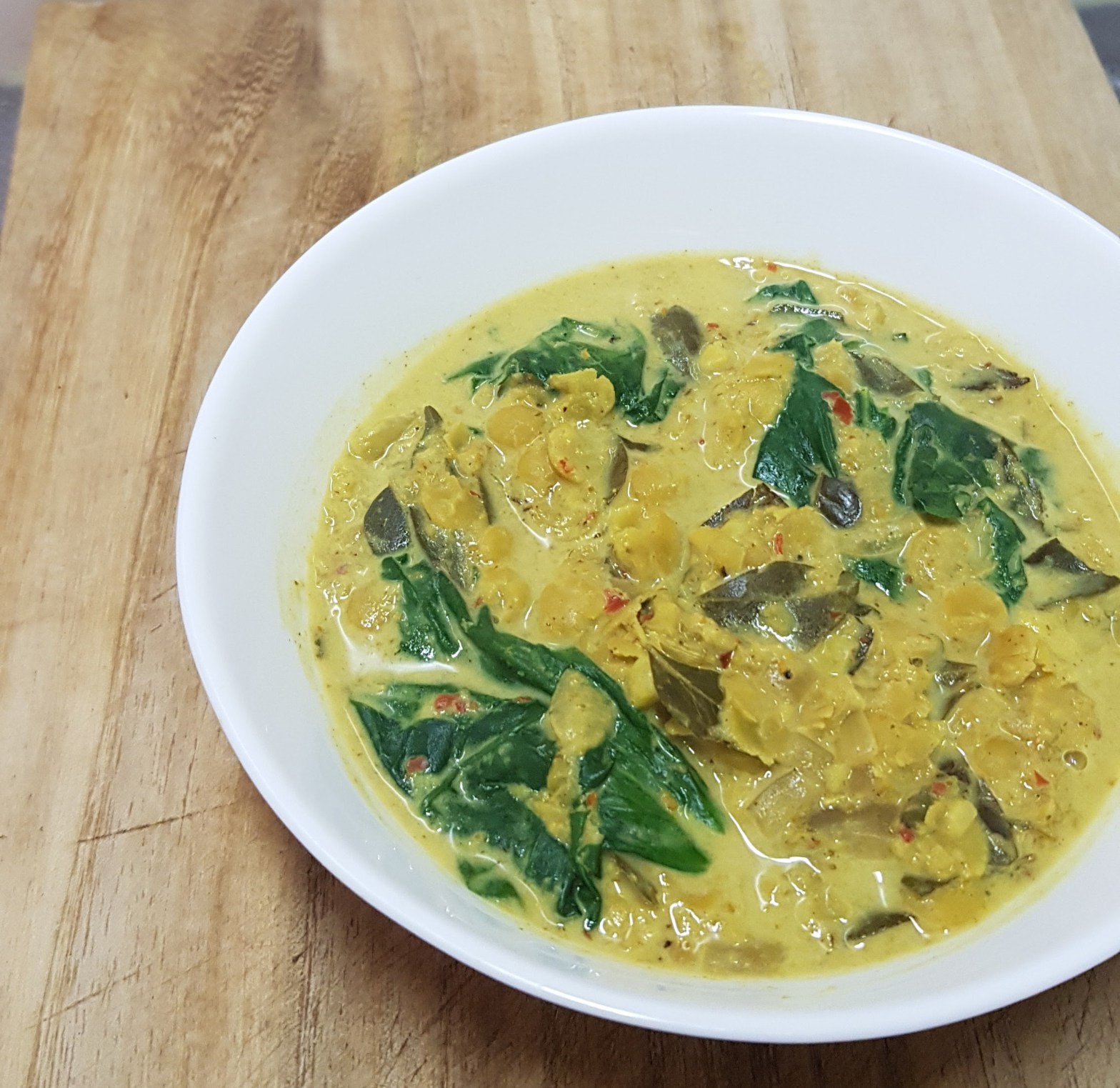
dhal curry

This is my 3rd attempt to make Dhal Curry. I used a Toor Dhal, and for the 1st and 2nd attempt I overcooked them and made Dhal soup. This time, I almost overcooked them again, just managed to save them in time. I have finally figured out how long should it take on the pressure cooker (pretty much touch and go) as I simmer them with coconut milk after cooking.

It was quite fun to make, and takes a lot of patience as my grinder is a bit tiny. But smelling the spices, making them by myself, and tasting them on my cooking brings Sri Lanka a little closer to me.

Stutti, Jehan!

Resilience with HSD

When the answers are not reliable, then our inquiries should be stronger.

We are all trying to cope with this new normal of the world. For those who are affected from COVID19, it is wearing a mask when going out, disinfecting regularly, staying at home as much as possible and avoidance of physical interactions. Maybe in some parts of our Earth, things are not as bleak, and people go on with the normalcy that they are used to, but again, this reality is quite relative.

I stumbled upon the Human Systems Dynamics Institute (HSD) either through Twitter or some other medium while I was doing research on facilitation. I received a newsletter about a weekly call they are offering every Sunday titled: In this moment: Resilience. This is the background of the call:

Please join us every Sunday for a conversation online about how to thrive in this time of turbulence and uncertainty. With a stance of inquiry, we’ll explore the tensions that are at play in this unprecedented moment. How are these tensions showing up in our lives right now? How do we see them at multiple levels of scale – in our relationships, work environments, health care and political systems, global news reports, and in our own hearts and minds? What will it take to effectively navigate the polarities and paradoxes that characterize this moment? And what if acknowledging and living in the present tension, polarities and paradoxes actually IS resilience itself?

Since I will be at home, and learning something new felt wiser than binging on Netflix or gaming on the PS4, I decided to participate and see what was this about.

For this call, there were about 11 people who joined. I was introduced to the vision of HSD and two, very interesting points.

HSD has a vision in 2050 that

People everywhere will thrive because
they see patterns clearly
seek to understand and
act with courage to
transform turbulence and uncertainty into a
possibility for all

HSD Vision 2050

My two main takeaways from this call, are the Rules of Inquiry and Dynamics of Decision Making

Rules of Inquiry

Our answers to things are certainly not reliable. What maybe true in one moment/one place may not hold true for another. When our answers are not resilient enough, then our method of inquiry should be stronger. Try replacing

judgement with curiosity
judgement: He’s difficult to work with. He always <insert something here>
curiosity: I wonder what is he going through right now?

conflict with shared exploration
conflict: We will never work out, we are too different.
shared exploration: let’s find a shared understanding and work from there.

defensiveness with self-reflection
defensiveness: Fine, it’s always my fault. You will never understand.
self-reflection: How am I relating at this moment? What needs are not being met that is causing me to react/respond in this manner?

assumptions with questions
assumptions: I don’t matter to you.
questions: I value you and you mean a lot to me, would you be able to tell me honestly how you feel?

The examples are just what I thought up on the top of my head. But I understand how it could be helpful than the former.

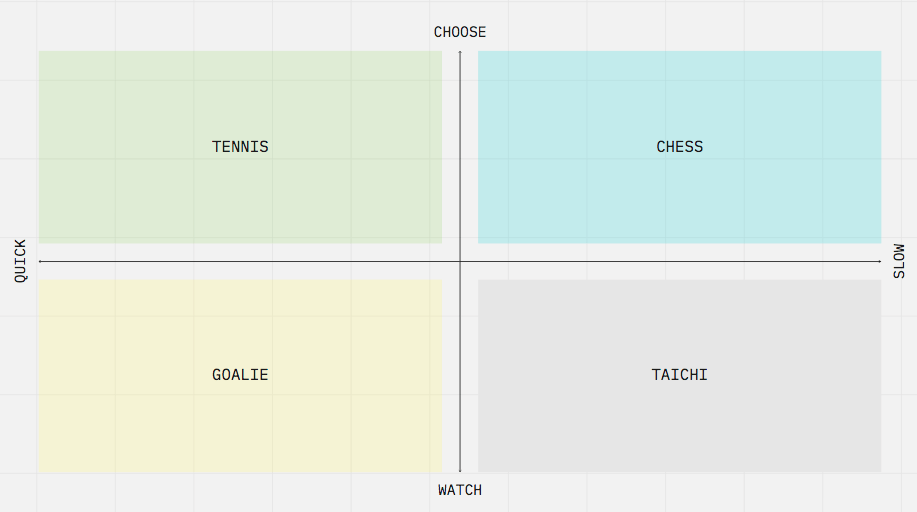
Dynamics of Decision Making

Made in Miro, graph provided by HSD

There is no right quadrant of choice. We flow through these based on the moment to moment situations we are having. There are both benefits and risks in choosing a quadrant. The important thing to be aware of is Which will I do? And when?

After doing an activity that demonstrated the 4 quadrants, we broke out into groups and talked about what pattern is most comfortable for us, what is the world calling for you today? and how can you most effectively answer that call this week?

It was an interesting thing to reflect on. And something I would like to think about as I am about to start the work week tomorrow.

I am looking forward to what will be discussed on the next session.

#EmpathyCircles – Session 1 Look back

From the makers of the Empathy Box, Tribeless Co. is currently conducting a global experiment in creating safe spaces online. I and 20 something other hosts from around the world are going to host Empathy Circles, the virtual spin-off of the Empathy Box.

What is the Empathy Box?

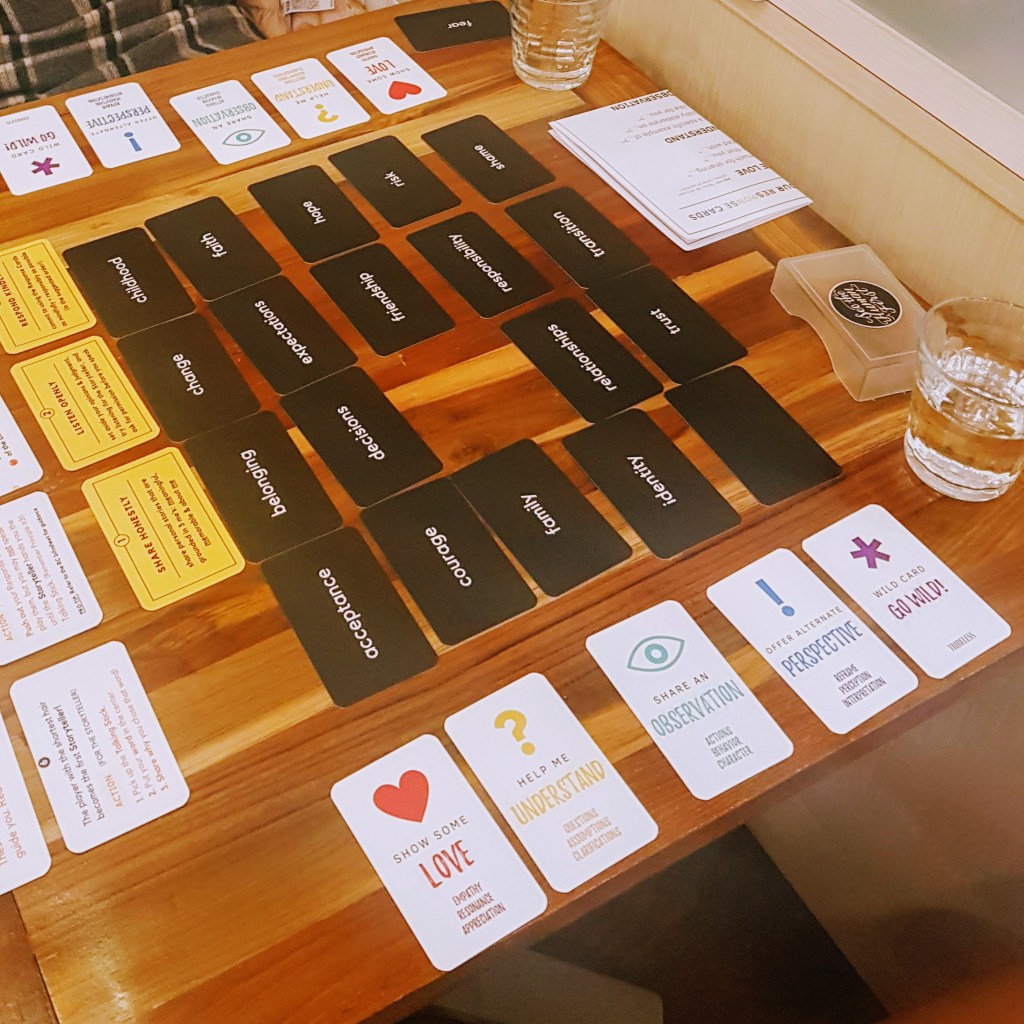
It’s a card-based facilitation tool that helps foster deeper and meaningful conversations in our fast-paced digital world. And helps us practice Empathy.

2 months ago, I applied for a scholarship to get my own copy of the box to use for a variety of facilitation work and team building activities. I was interviewed by Shawn (who told me he’s the all-around admin guy but he’s really the CEO of the company, so humble.) He seem to like my answer so in return for going through scholarship, I had to write a report on how it created an effect (or not) in terms of facilitation and having conversations. I have used it twice so far and then COVID-19 happened.

With most people shifted to working from home, prior to Tribeless inviting me to take part in this activity, I was already wondering how to recreate this online. I was planning to do this with a friend who also does a similar line of work to mine who suddenly went back to Canada and asked me if we could do it over the Internet.

So to help me get the hang of facilitating virtually, I decided to join this initiative. I just finished my first session a few hours ago with a friend and her friends whom I haven’t met.

Preparation Work

Tribeless was kind enough to provide the initial materials to kickstart your own Empathy Circle. As with any facilitation work, you setup the environment to the best of your abilities to make it as smooth as possible, and that takes a lot of time and effort. Even more so when you do things remotely.

  • Preparation work would take at least twice the time of the actual workshop. (An activity of 2 hours would require at least 4 hours of preparation work.)
  • Understand the slide flow, the speaker notes to ensure smooth transition of the activity
  • Make sure all the materials/tools you will be using are organised to your liking (if I’m sharing multiple things on the browser, even the tab order is essential)
  • Test your peripherals prior. I have never hosted an event like this through Zoom. So using my mobile, personal and work laptop, I tested to see how the call looks like from both guest and host perspectives.
  • Since it’s not a work thing, I used Line to send updates and what they need to bring and how they need to show up for the session.
  • Breathe. (I always feel anxious just before any facilitation work)

The Session Itself

It was new for me to facilitate a group of people I barely know that is not in a work setting. I felt nervous explaining the session and missed some minor details. Since I was also a participant, my focus was split in being present for every participant and still in touch with the big-picture awareness of the session. That was the most challenging part for me. The mindfulness it requires is vast, and I need to remember to treat it the same way as a face to face activity. At one point, I had question for a participant and I completely forgot what I was going to ask (I learnt quickly and wrote my question down on the next try).

There were instances when I was looking at them and I wasn’t even sure what the current mood is. I could see their shifts in movement and how they look at the camera, but my mind is blank. There is no air to read. 

空気を読みたかったけど、読める空気がない。

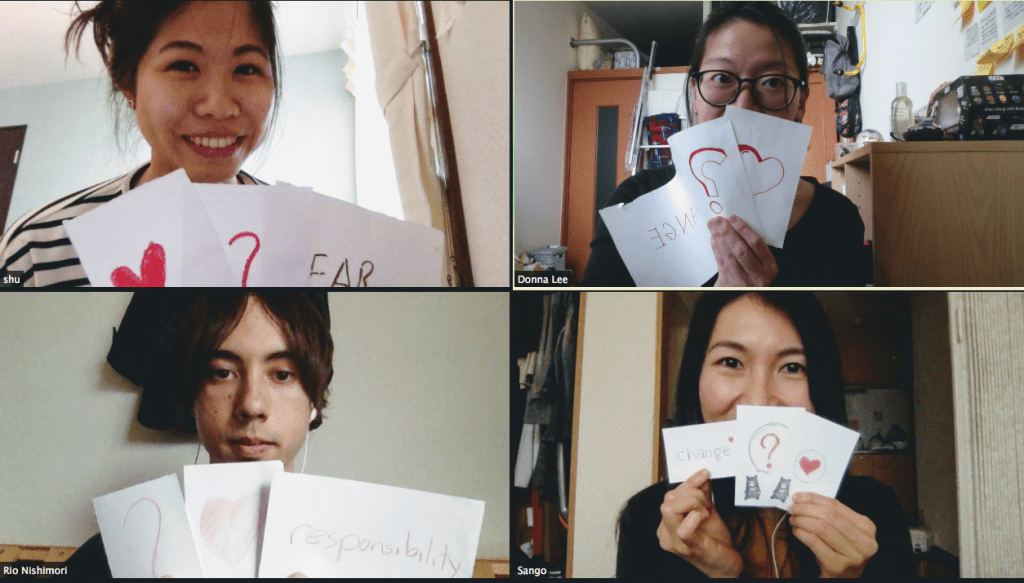
We were able to finish with lots of time to spare. From here, I could sense the mood of the group was light and people seemed to have been able to open up. It helped that my friend have done this before with me, and the group is curious enough to participate. They also agreed to have their “photo” taken.

A “group photo” of the session

Reflection

Needless to say, I am still new to online facilitation. It is more demanding in terms of tools (I am not fond of slides and prefer using a whiteboard and Post-its) and my observation is limited to what I can see on my screen. This was the first session and it went better than I expected. With this work, you never know what will happen until you actually do it, and you just respond to what is happening at the present moment.

Some observations :

  • As a participant/facilitator, write down questions when listening to another person’s story due to multi-tasking
  • Remove the screen share during the story session so that people can see each other better

Let’s see how my next session will fare. I will be doing this with more participants next session with an interesting mix of people, so it will be a new experience again.

Interested to join the movement?

If you want to be a host or try the #EmpathyCircles as a participant you can check more information here http://empathycircles.tribeless.co/

As a facilitator, a change agent, a colleague, a teammate, a friend, a family member and most of all, a human being, I truly believe love, kindness and empathy will always win.

Food of Kyoto – Spring 2020

宇治抹茶

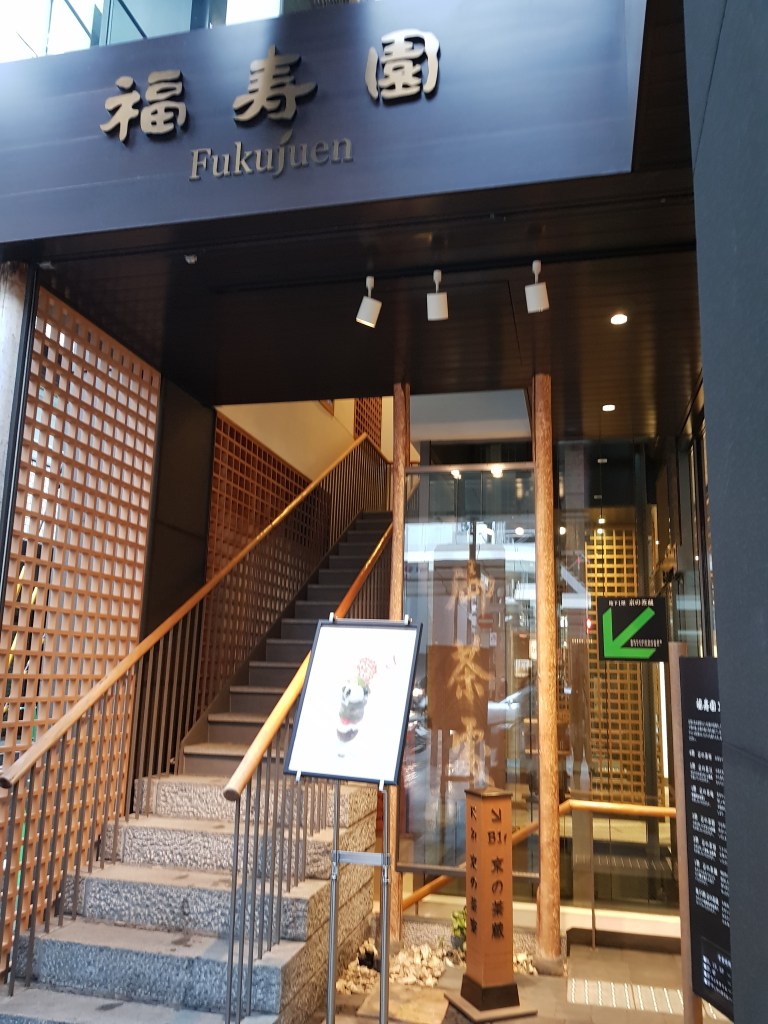
Kyoto is the home of the famous Uji Matcha (宇治抹茶). I asked my hotel what is their recommendation to eat Matcha desserts and they told me to try Fukujuen 福寿園 main branch in Shijo Karasuma 四条 烏丸. I had a Matcha Parfait with topped with a delicate waffle, Uji Matcha Ice cream, with an assortment of lovely fillings like fruits, Matcha cream, some unidentifiable stuff and Matcha and Houjicha jelly. I pretty much destroyed the thing, and considered having seconds.


こってりレーメン

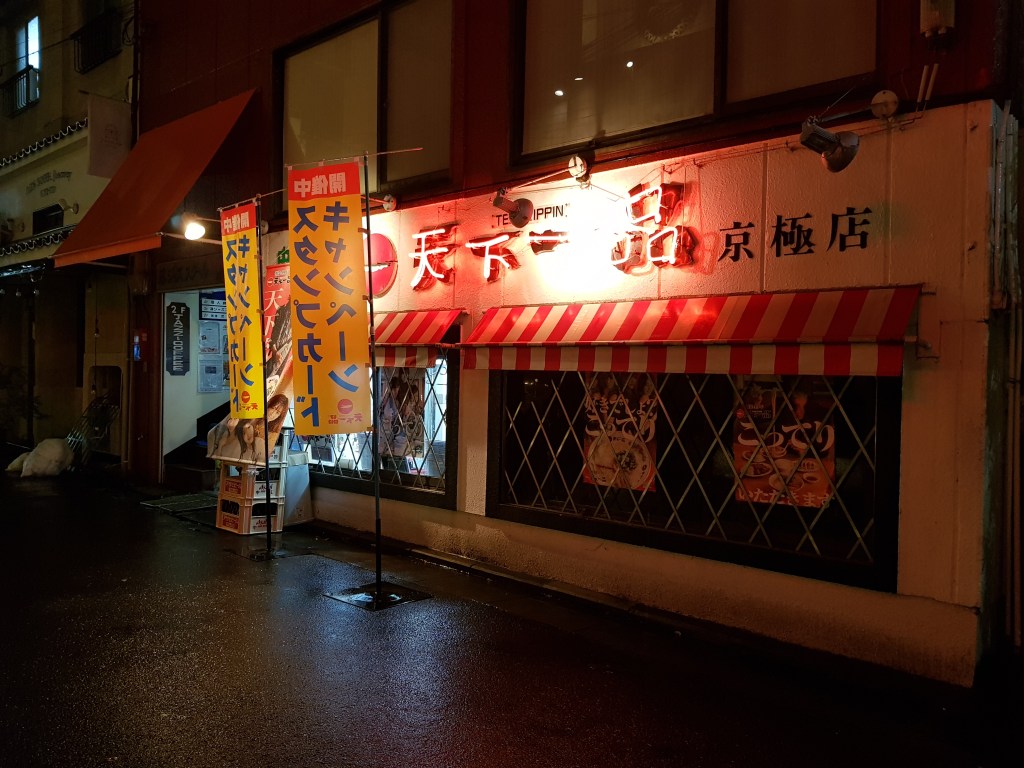
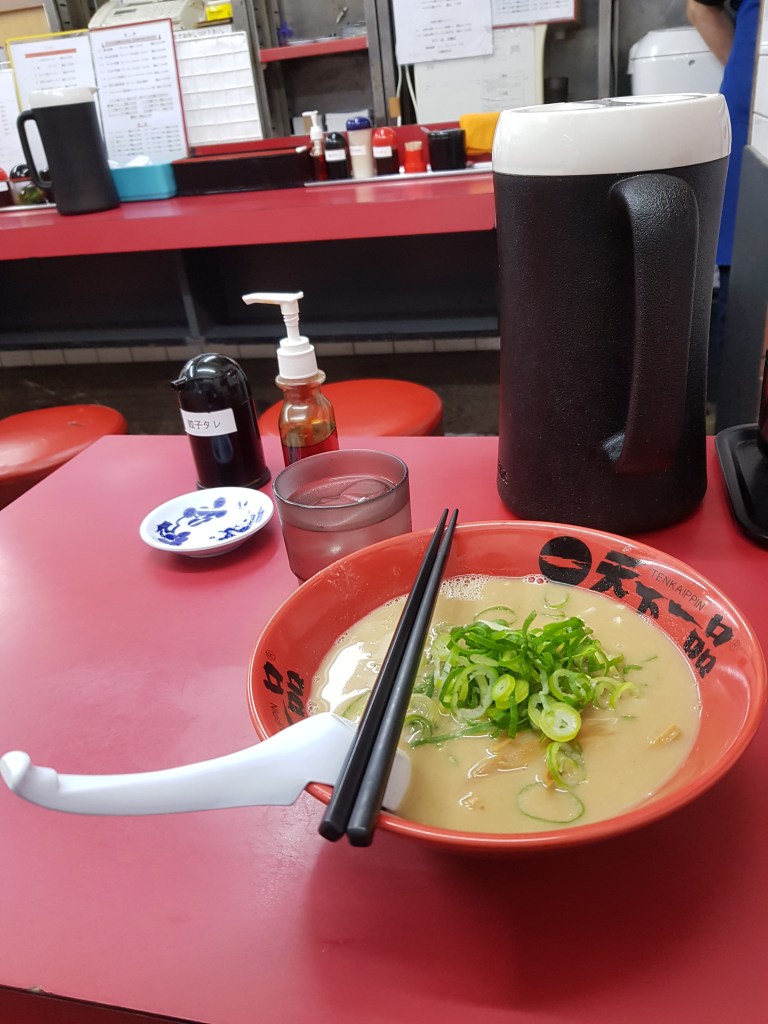
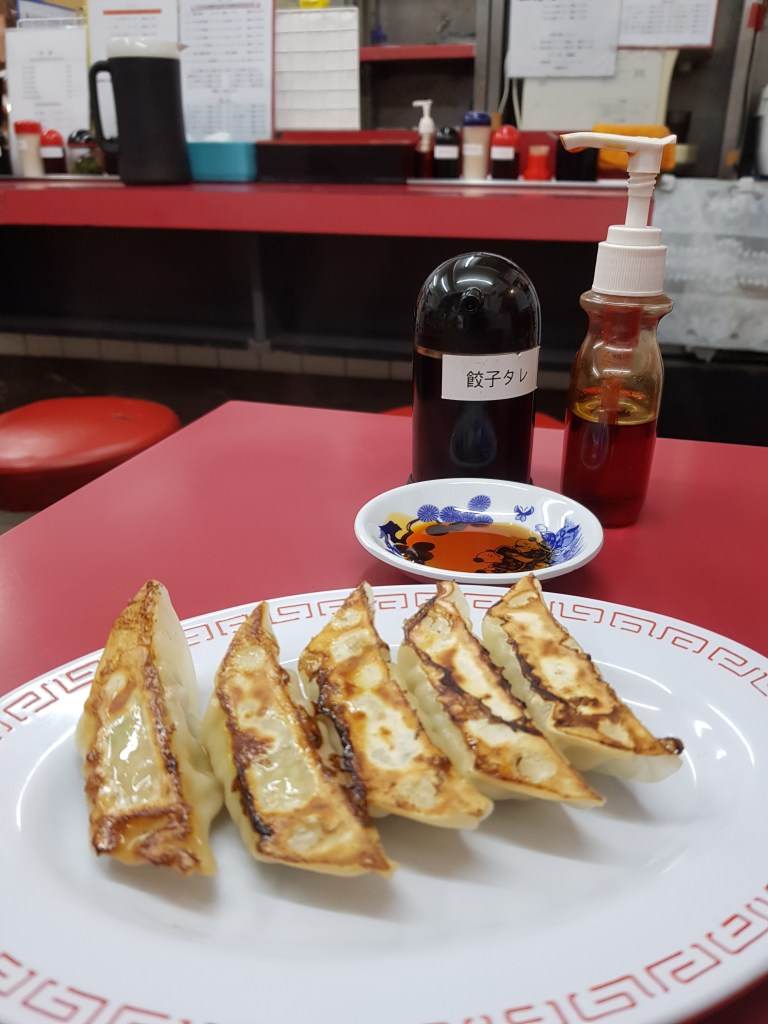
A friend told me if I were Japanese, he would recommended me to eat at Tenkai Ippin Ramen (天下一品ラーメン). When I asked him post-trip why, he said it is a ramen for マニアック (enthusiasts). I am glad I did not heed his advice and ate Kotteri Ramen こってりラーメン with Gyoza 餃子. The Kotteri ramen is an insanely thick broth made from chicken collagen and the flavour was so intense and rich compared to a Tonkotsu broth. I have eaten at Tenkai Ippin in Tokyo, but this store tucked in the backstreets of Shijo 四条 was more delicious. I enjoyed kitschy, hole-in-the-wall vibe and the surprise message when you are about halfway done with the bowl.


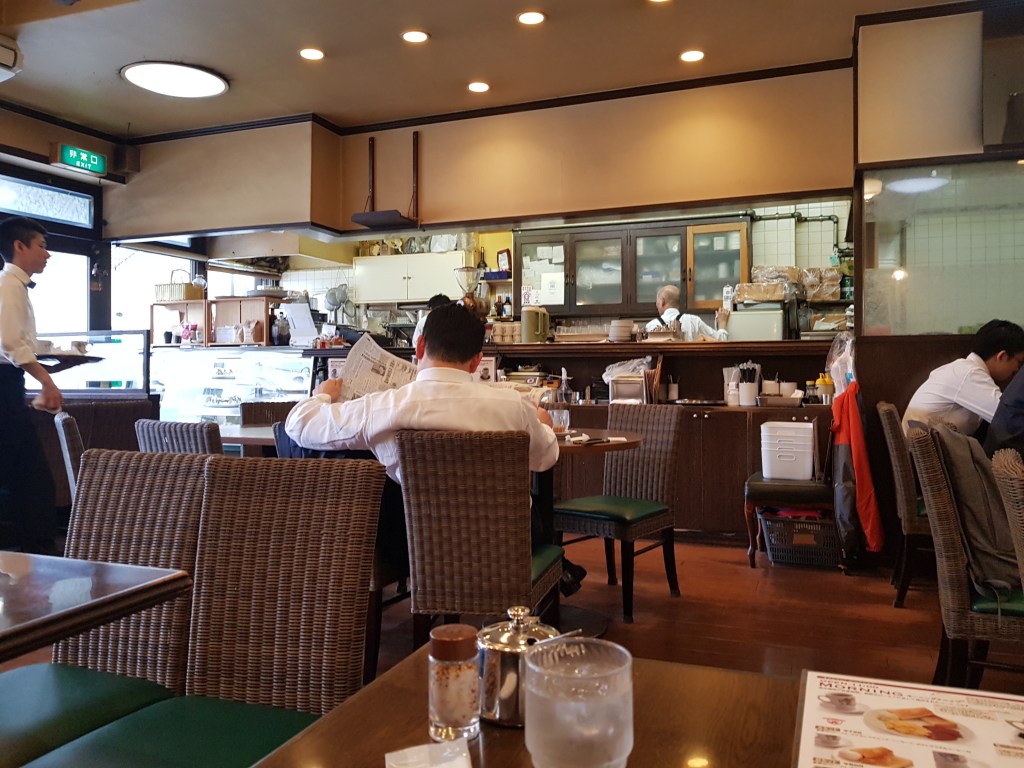
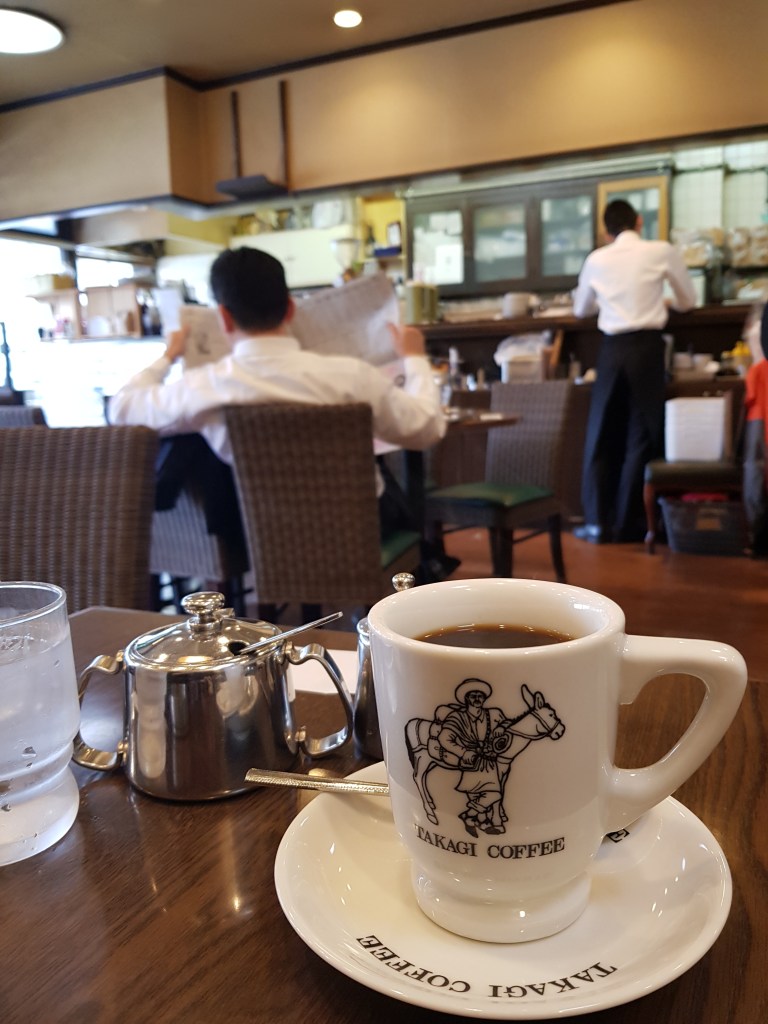
喫茶店

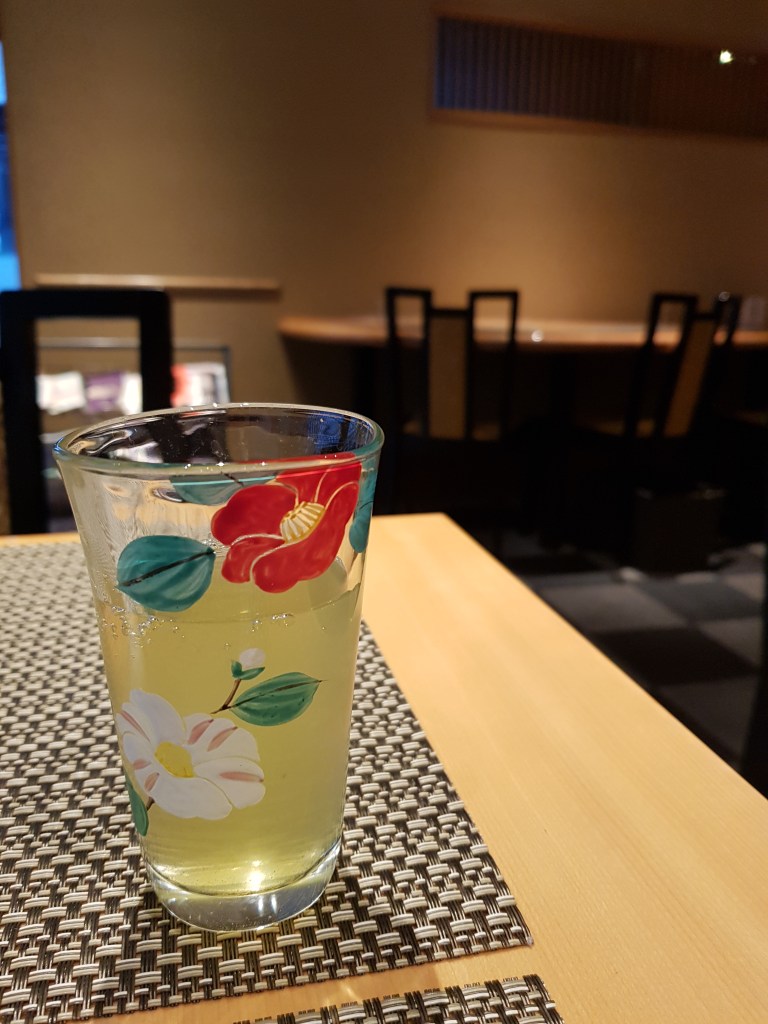
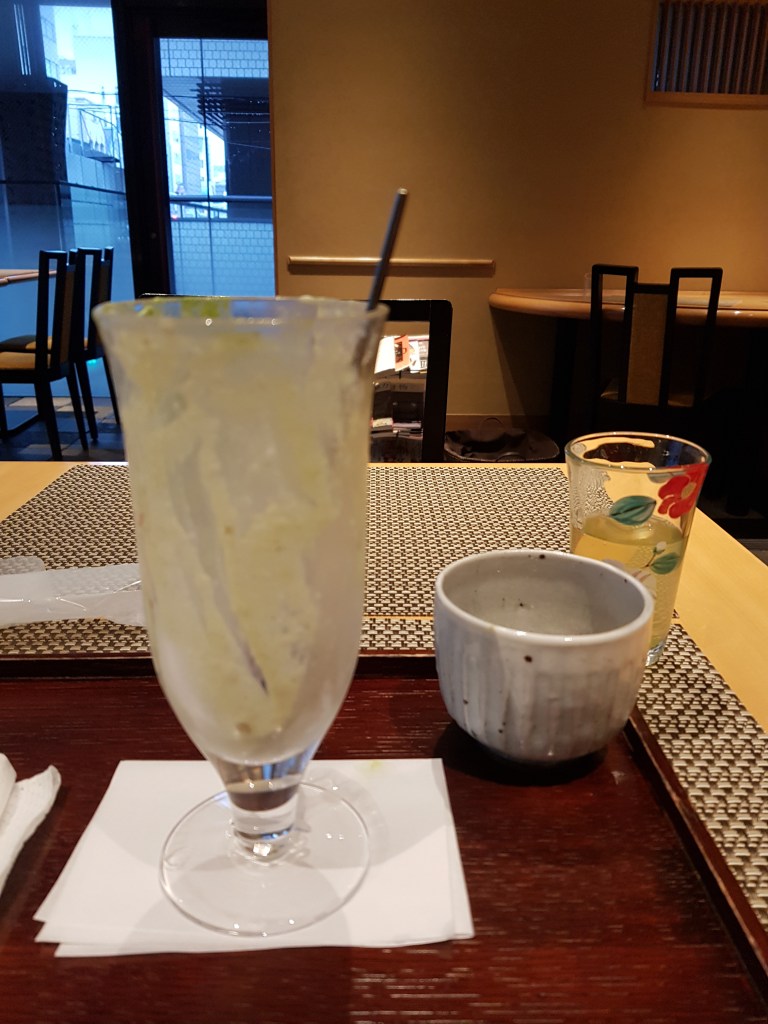
The main city of Kyoto is home to many old-style cafes. I stumbled into one near my hotel. Enjoyed the totally random cup design a lot.


おやつ

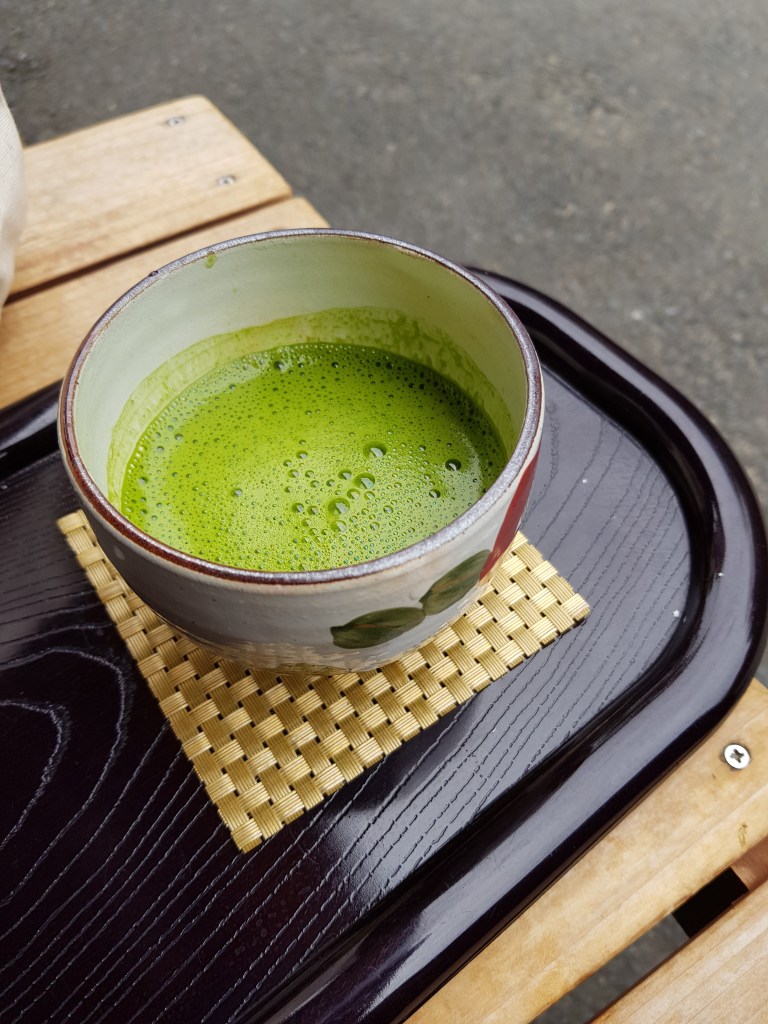
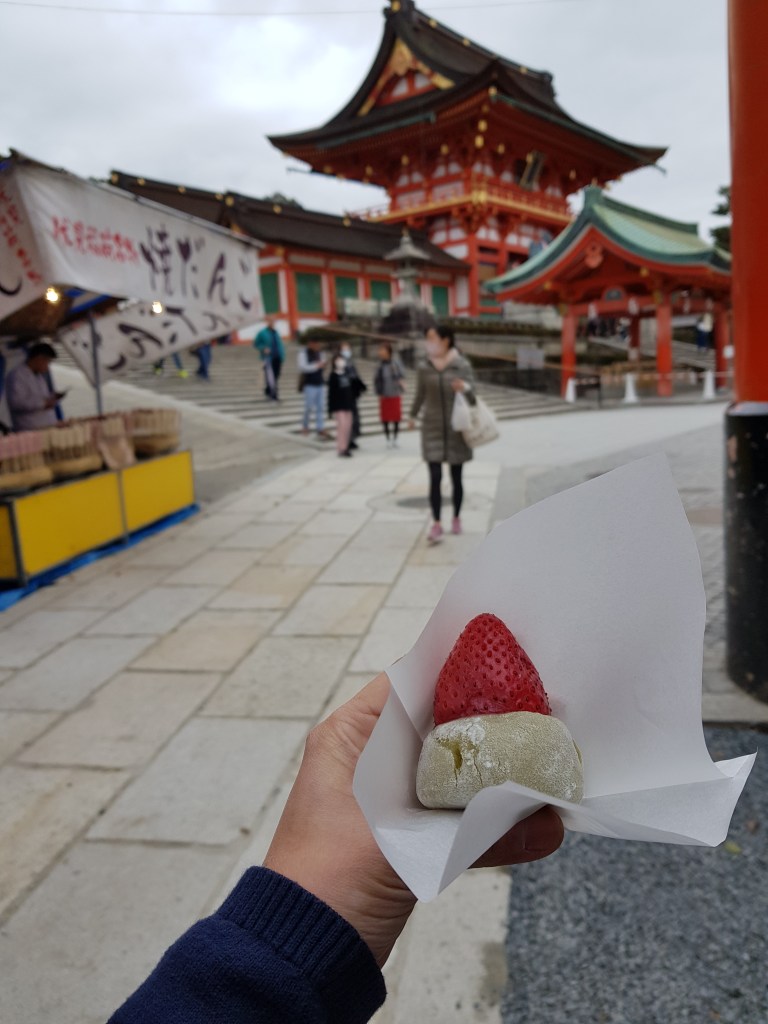
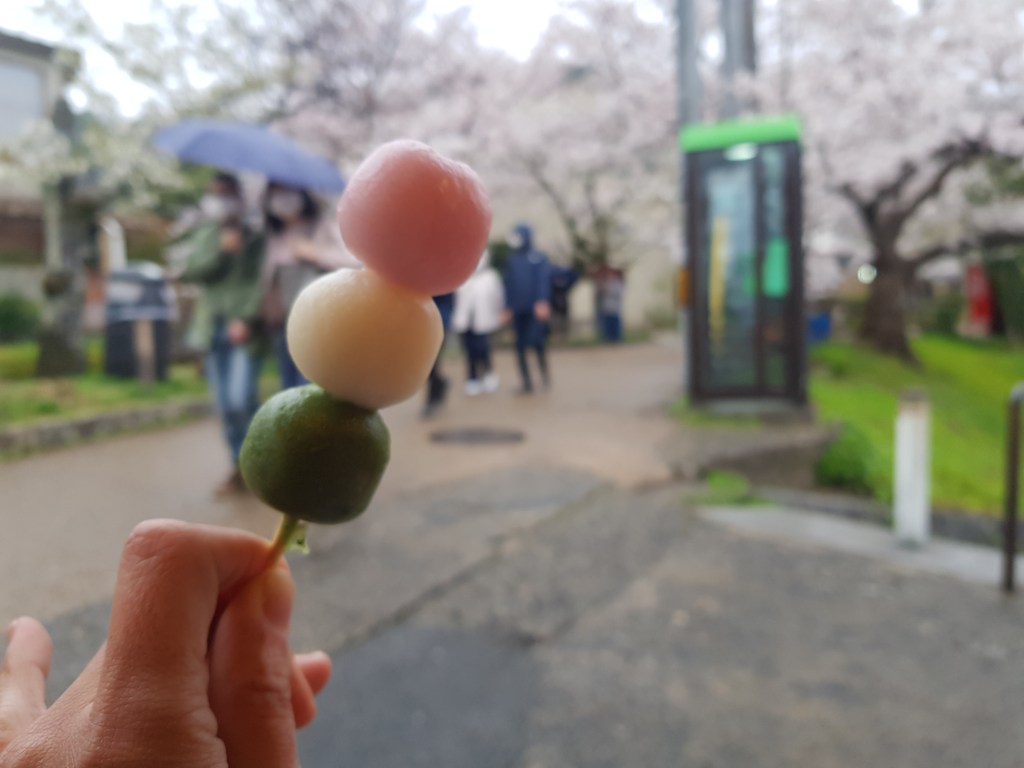
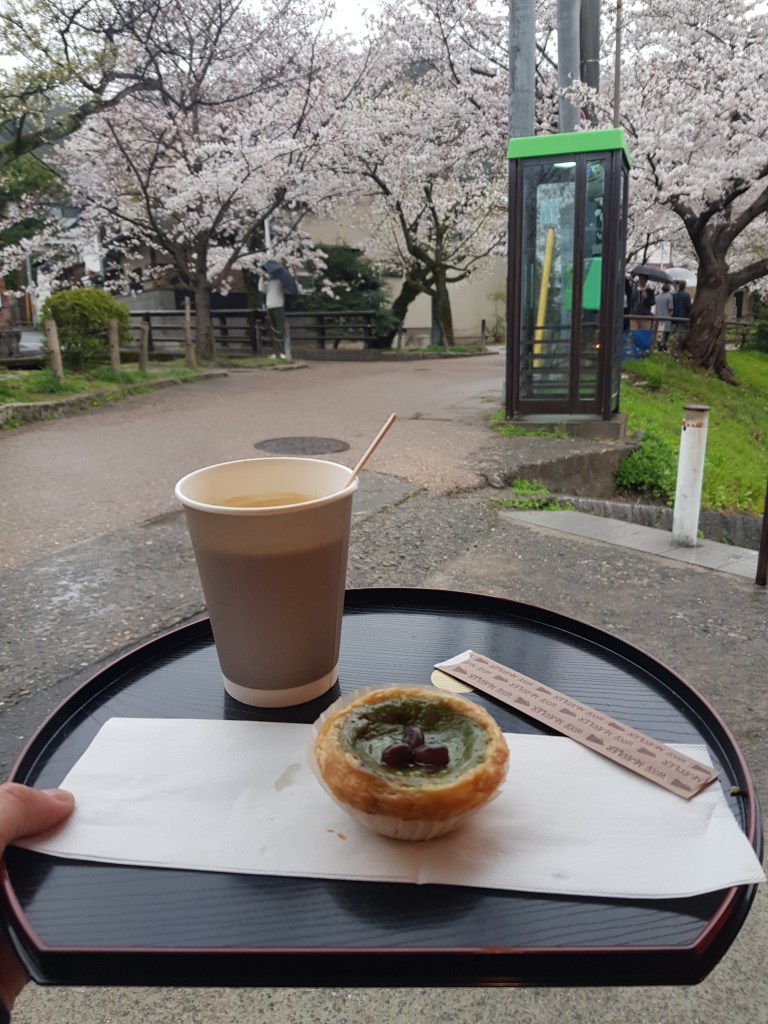
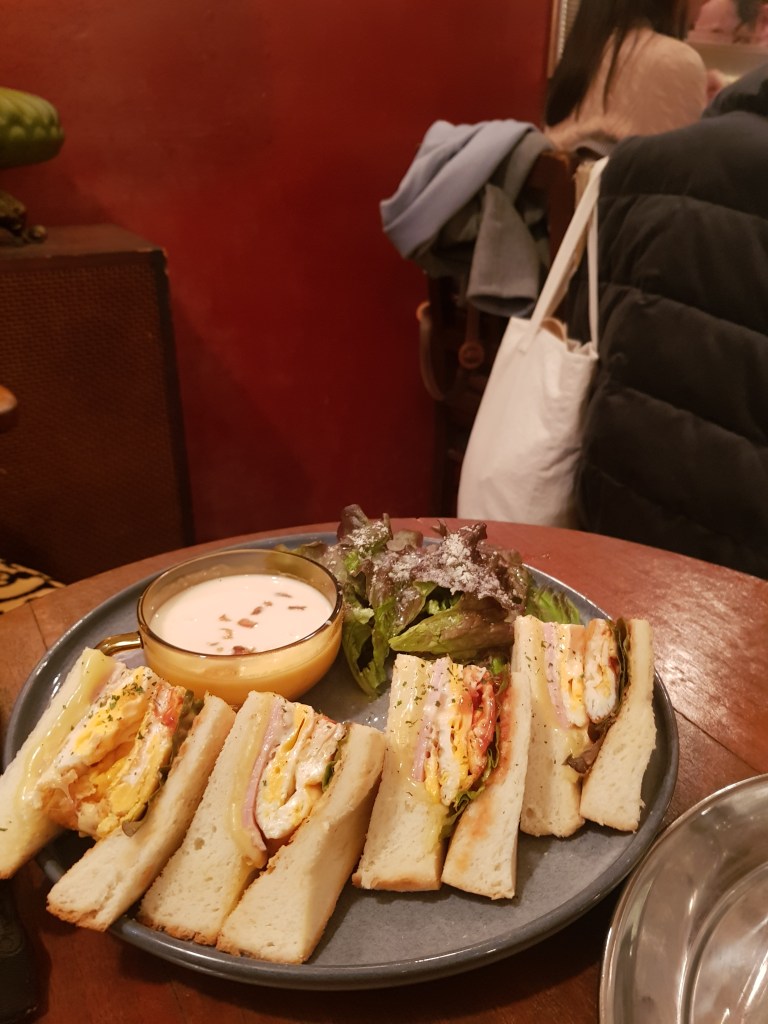
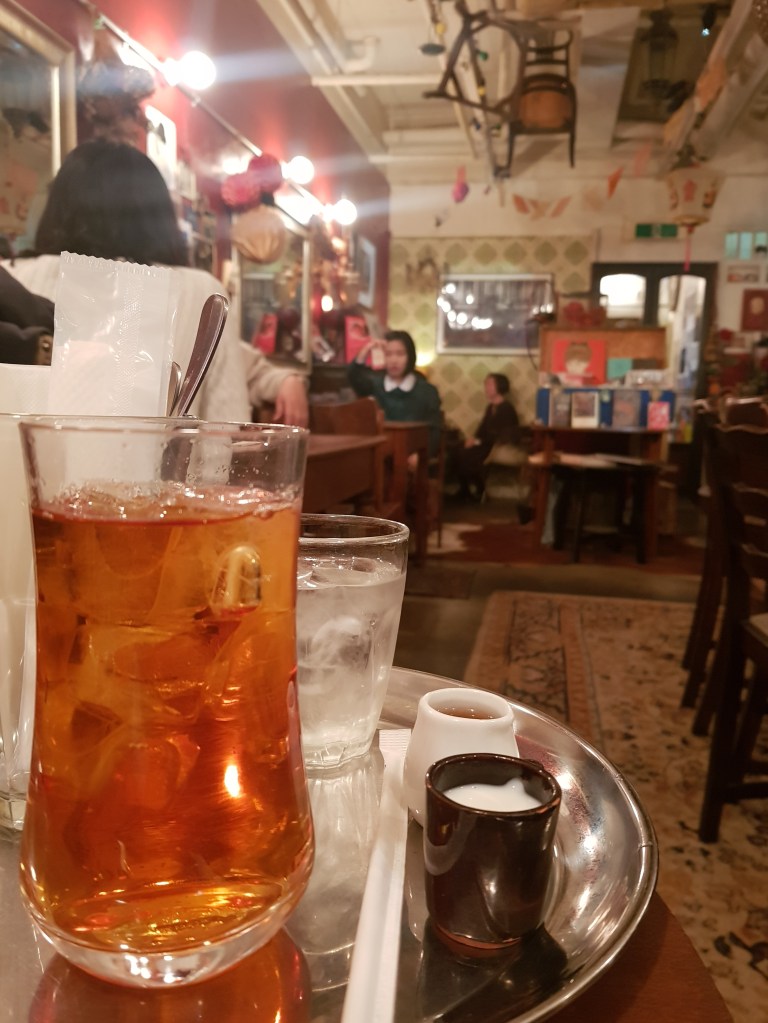
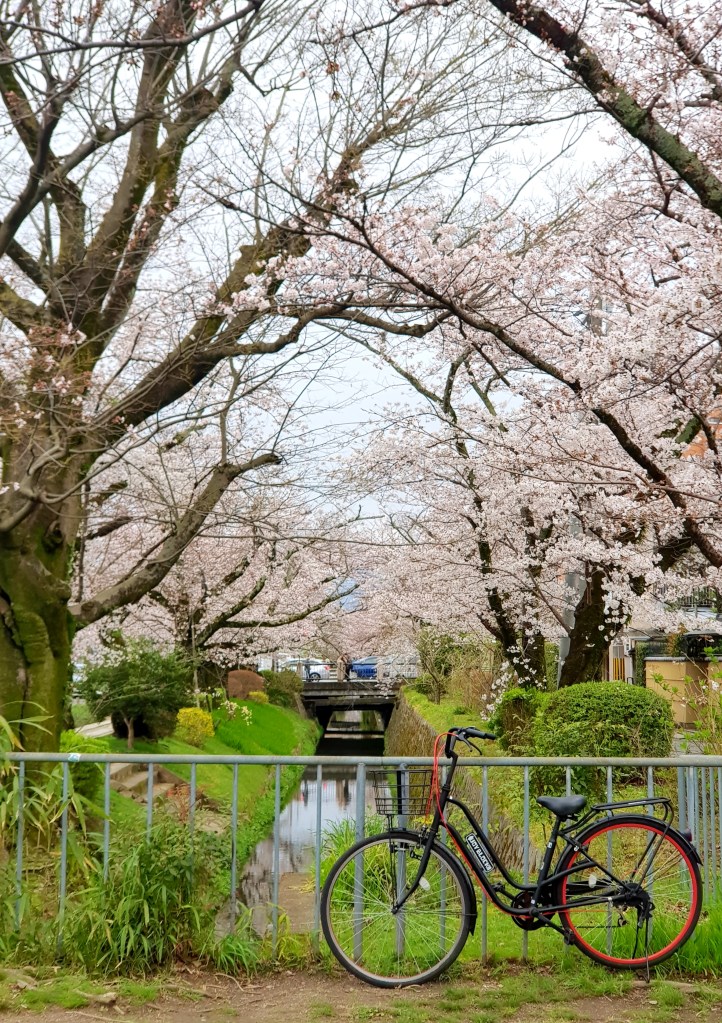
Some snackage I had in Kyoto. After the trek from Mt. Inari, I sat on a shop to have my first Uji Matcha in tea form. Frothy and not sweet, the lady who runs the shop told me it is usually paired with desserts or sweet things, I said it was my first time to drink it and apologised profusely for not knowing, but she told me a lot of people also drink it on its own. I passed by some food stalls and saw a shop selling strawberry Matcha Daifuku 苺抹茶だいふくso I ate one while looking at the shrine grounds. While at the Philosopher’s Path, I happened to chance a shop selling Hanami Dango 花見団子, and was able to do the quintessential eating a dango while watching sakura tradition. And that didn’t stop me from having a coffee with a matcha egg tart afterwards. The shop owner was funny and told me the price of the Hanami Dango was 100,000 yen. I jokingly backed away and said, あ、いや、けっこうです。(Oh, nevermind, thanks anyway!). After strolling the grounds of Nijo Castle, I settled at the cafe inside the castle grounds to have Matcha chiffon cake with whipped cream and adzuki beans and a coffee. I am not fond of sweets but am very fond of Matcha. 当たり前じゃん (duh)。I was told the egg sandwiches were good as well, but made a mistake and got ham and egg sandwiches, which is made differently. Ah, but the cafe interior made up for it.


鰊蕎麦

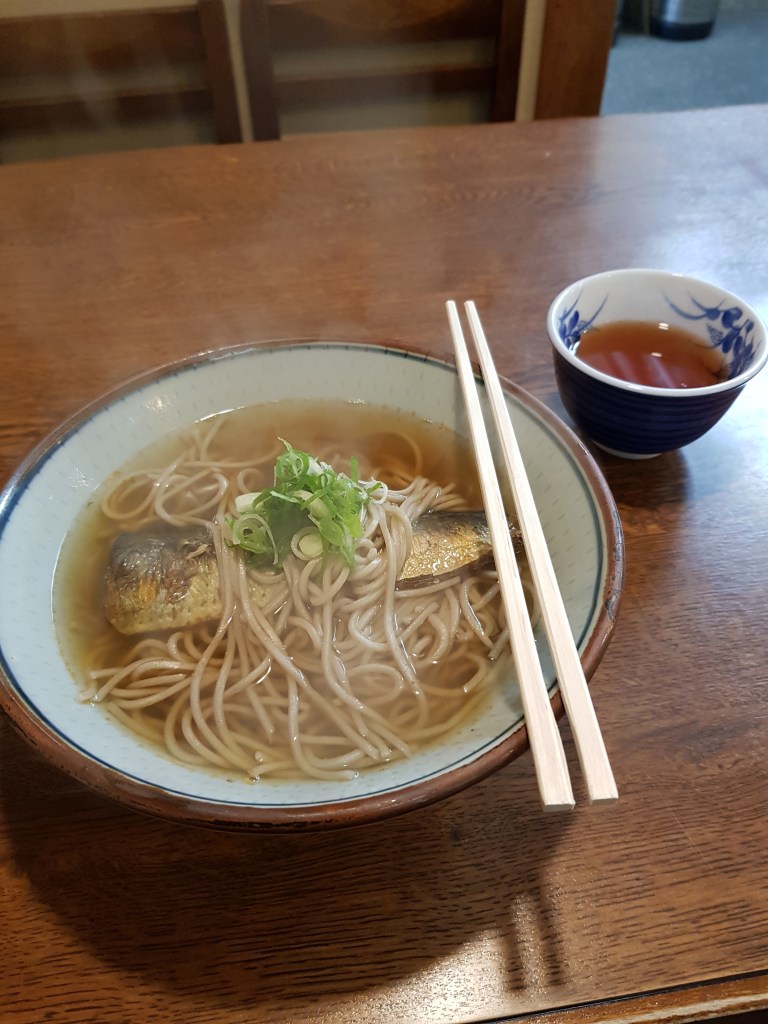
My former teammate said that if I like soba (and I do) I should try the Kyoto style Nishin Soba 鰊蕎麦. A delicate broth made with dried herring topped with a grilled Herring. Passed by a shop selling it but the portion was huge and I kindly asked them if they can make a smaller bowl with less noodles (I don’t care if the price is the same, I hate wasting food). They seem curious about the request but pretty much okay with it. I am not too fond of fish, but the flavour was smokey and wonderful and not fishy at all.


PCAAAN?バー

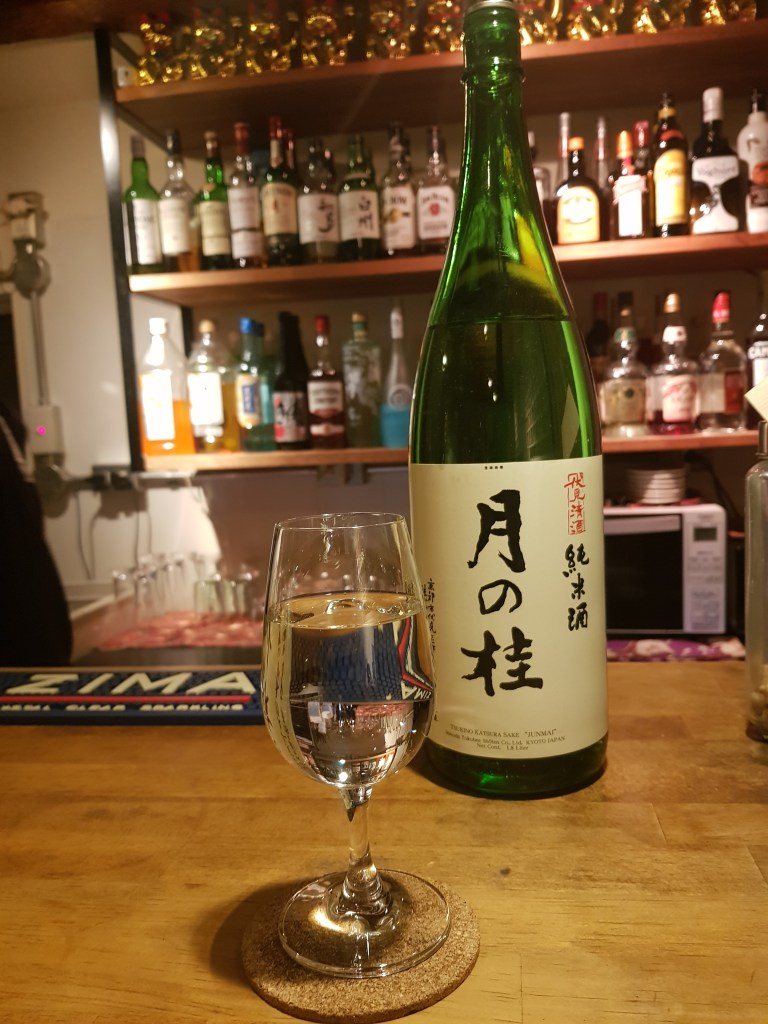
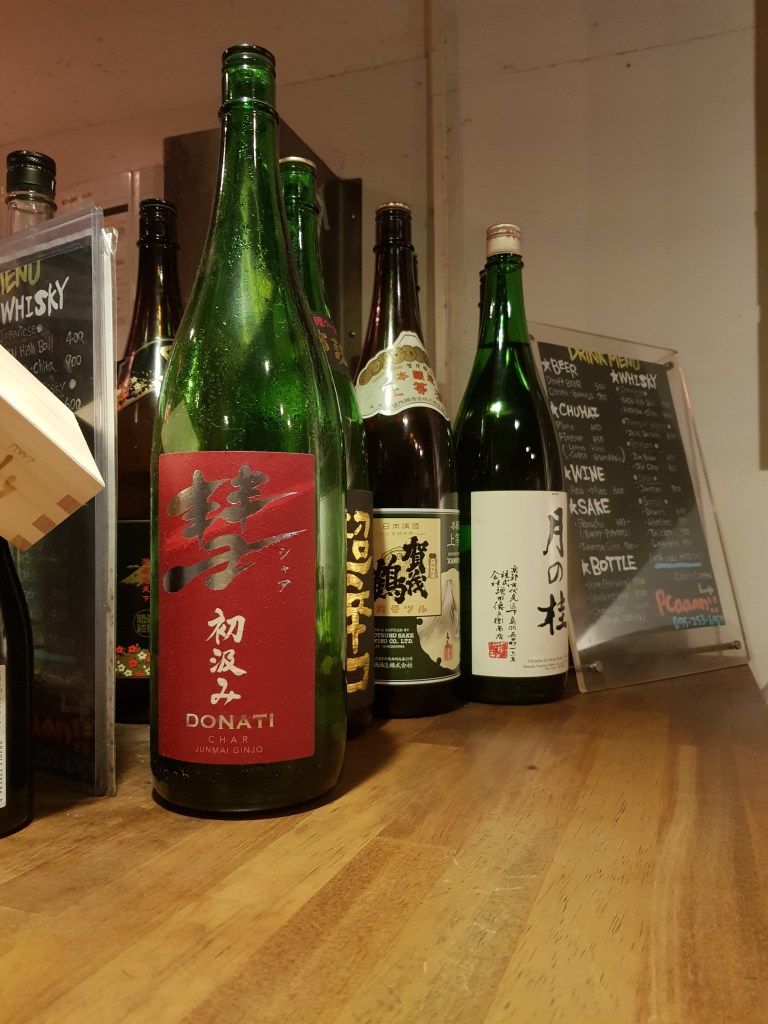
It is slowly becoming a tradition when I travel solo around Japan is to find a bar that I like and I just go there for the whole duration of the trip. I did the same thing when I was in Beppu, Kyushu. One reason is they remember me fairly quickly, and the next is I can practice my Japanese with the bartenders. This time, I found a random bar after eating ramen and walked in. The first floor was a Kushiage 串揚げ shop and they told me if I’m not eating deep-fried things on a stick I should head up to the second floor. Here I met Ikko-san (Dear Lord, I’m so bad with names, I hope that was his name!) , and he became my pseudo-language partner since I was the only customer. The most interesting point is probably that they pair their drinks with tinned food. I was absolutely tickled by this concept. He let me try a Sake* from Mie called 作(Zaku) 穂の智(Ho no Tomo) on the first night. He placed it on the wooden drinking box for Sake. It was fruity and very easy to drink (I am not an expert of Sake but it was pleasing to my tastebuds . On the second night, I tried a Kyoto Sake called 月の桂(Tsukino Katsura) 純米(Junmai : A sake made without alcohol or sugar). It was also easy to drink. Since I always have dinner before coming here I never had a chance to try the tinned food. But it was really cute. He taught me a few words in 関西弁 Kansai-ben, the dialect of Kansai people and helped me translate the Pisuke and Usagi Line Stamps that are in Kansai-ben. I enjoyed my short time there. I saw a lot of random scribbles on the wall and asked if I could write something, he said yes and gave me a marker. You can easily find what I wrote.

*Sake is the English translation of 日本酒(nihonshuu) and (sake) is the Japanese word for alcohol. I am sure most bartenders who speak a little English knows what you mean by Sake, but maybe some will just look at you with confusion. So if you want to order sake in Japan, do say nihonshuu).


懐石

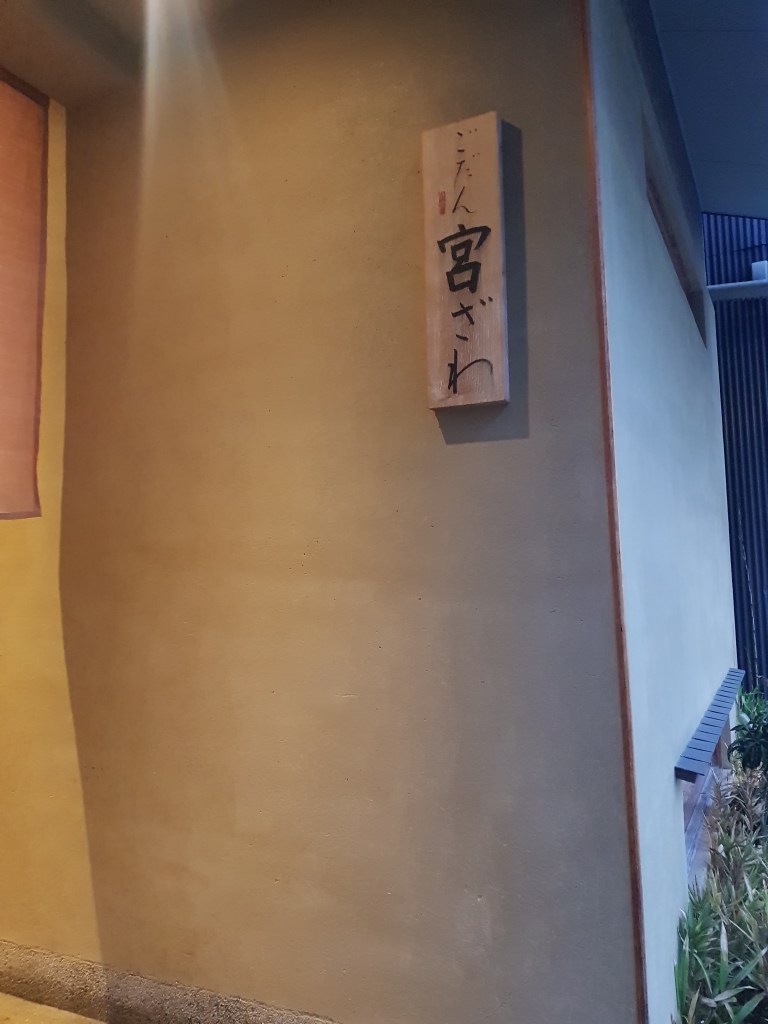
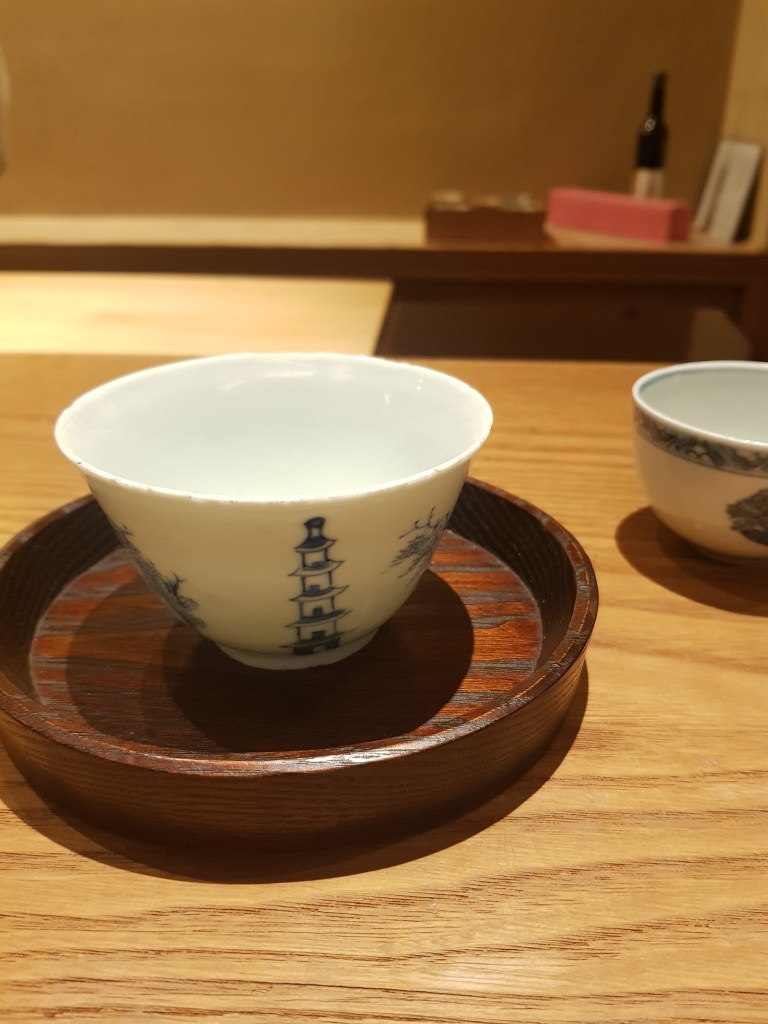
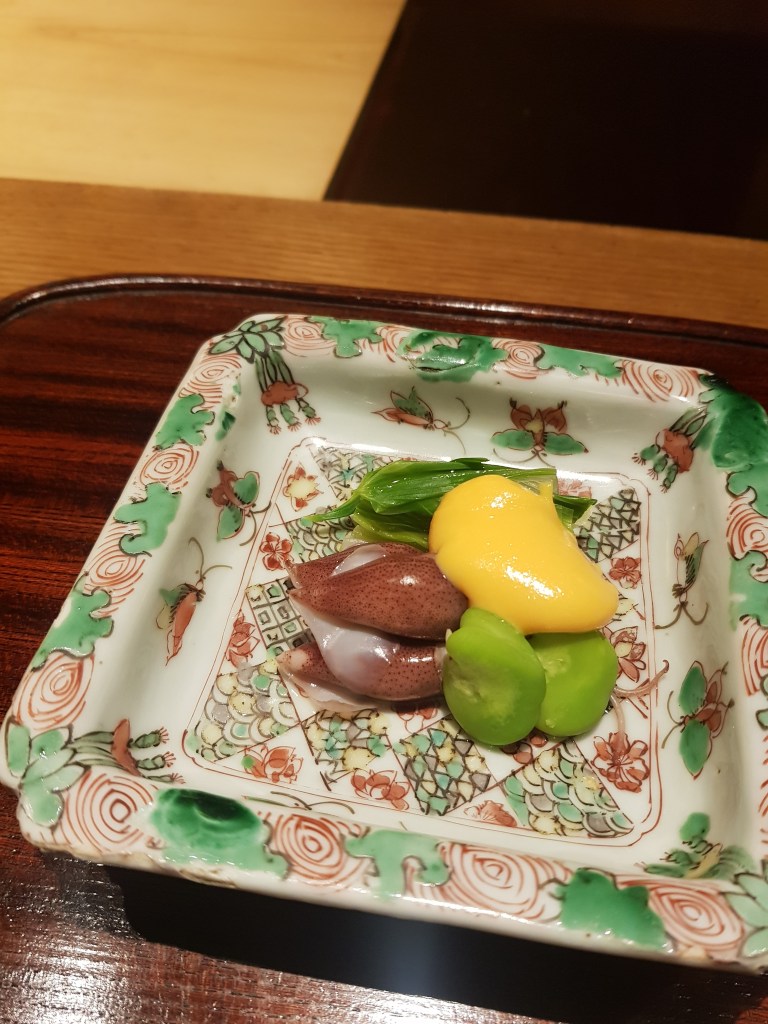
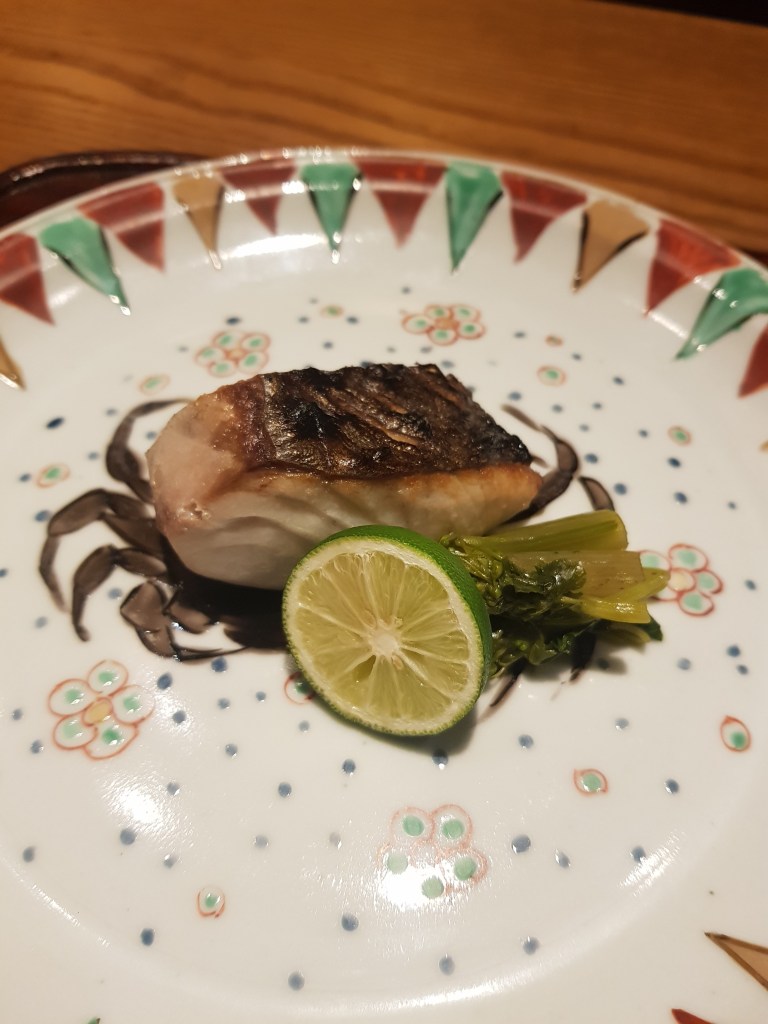
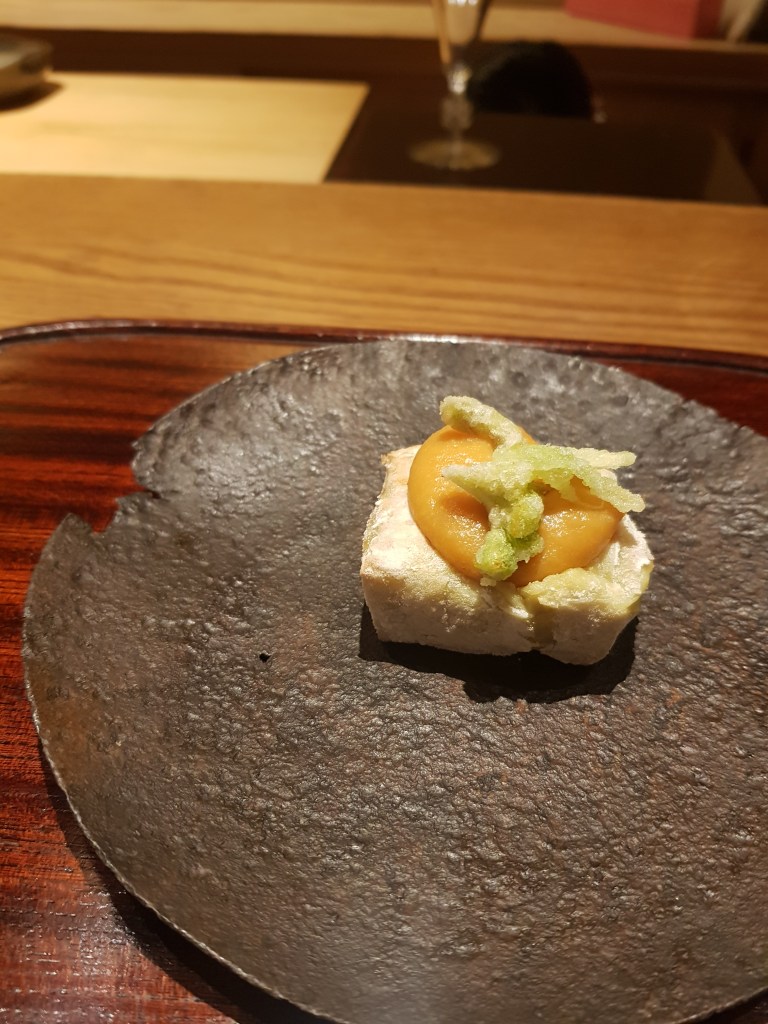
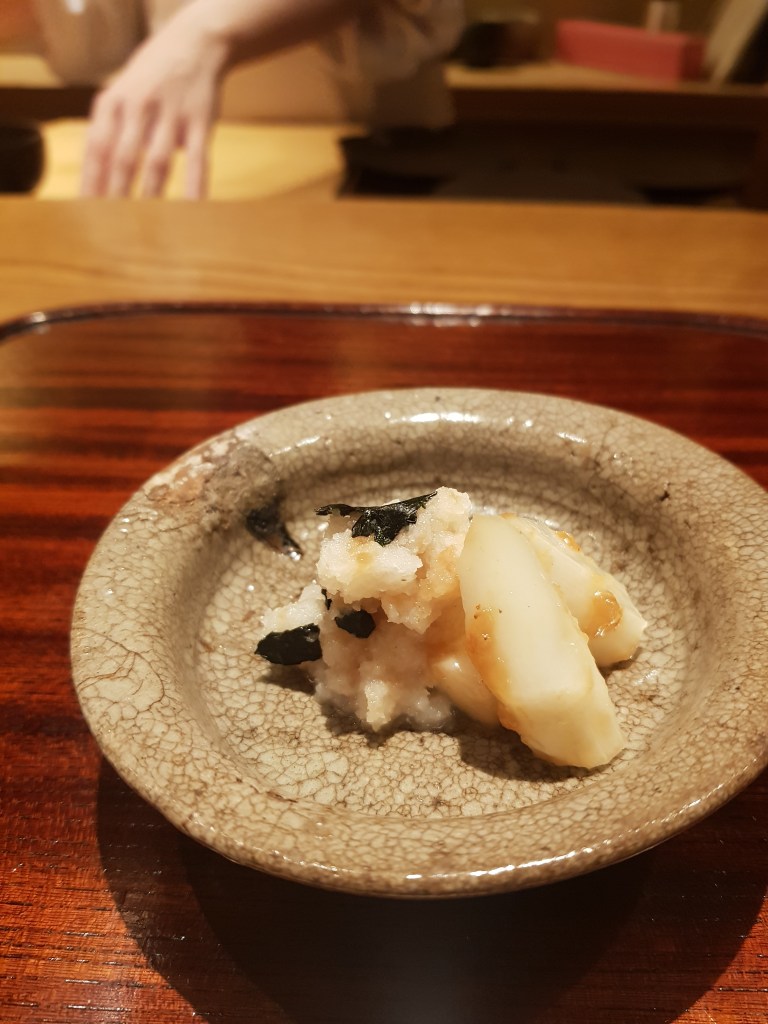
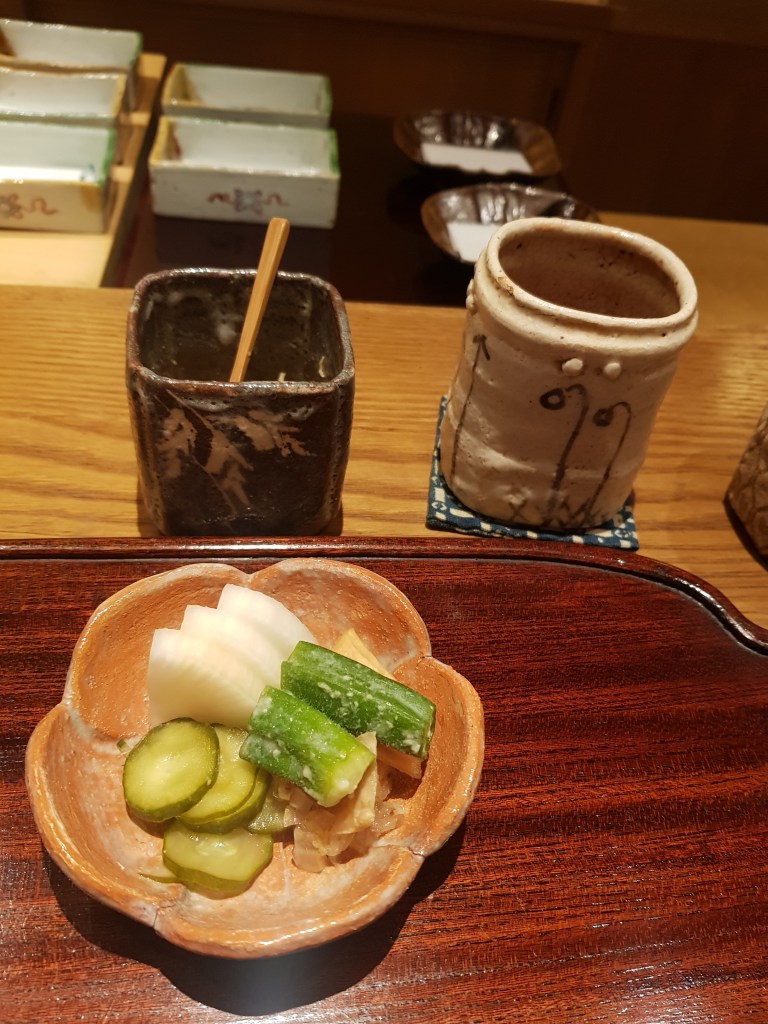
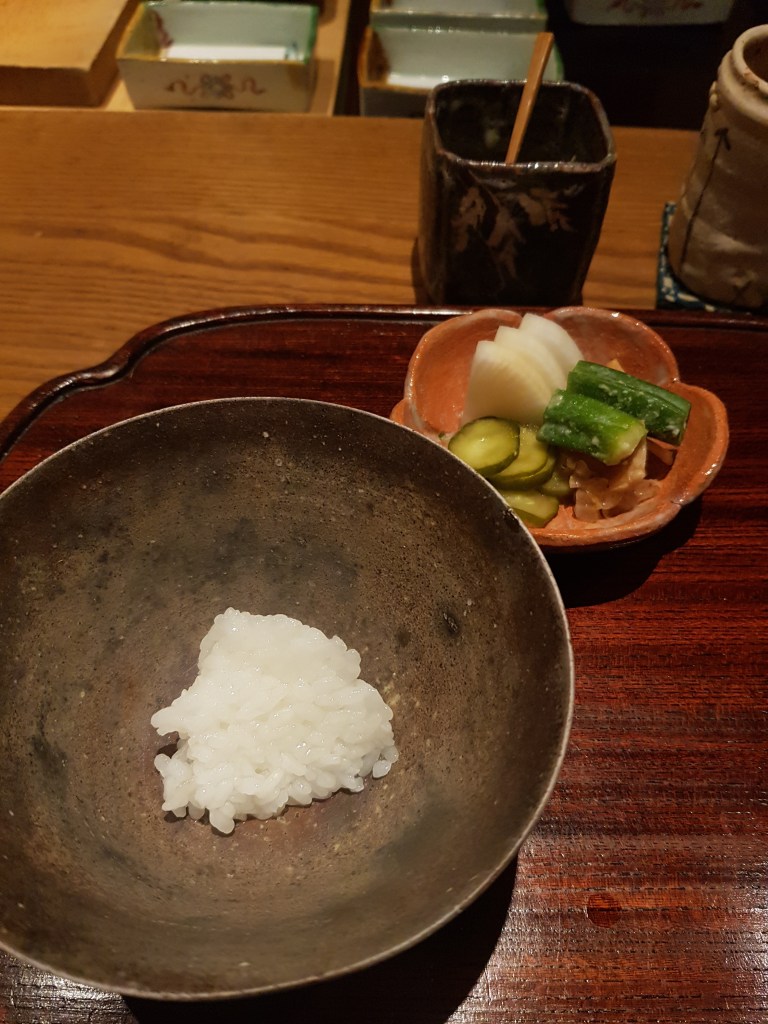
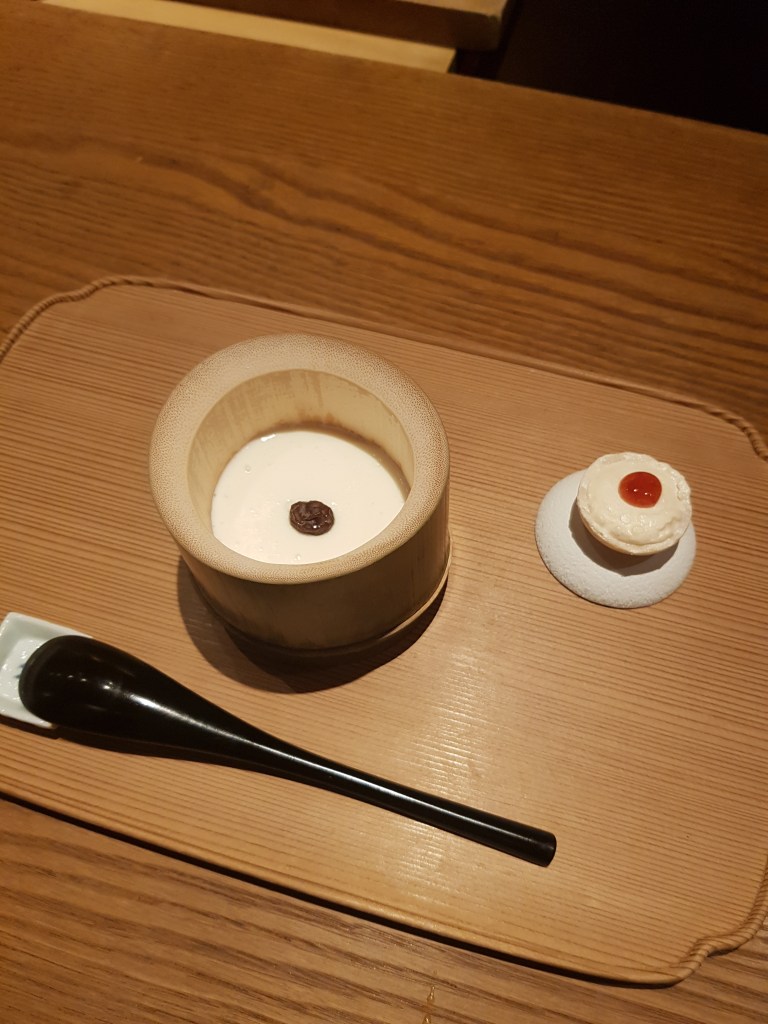
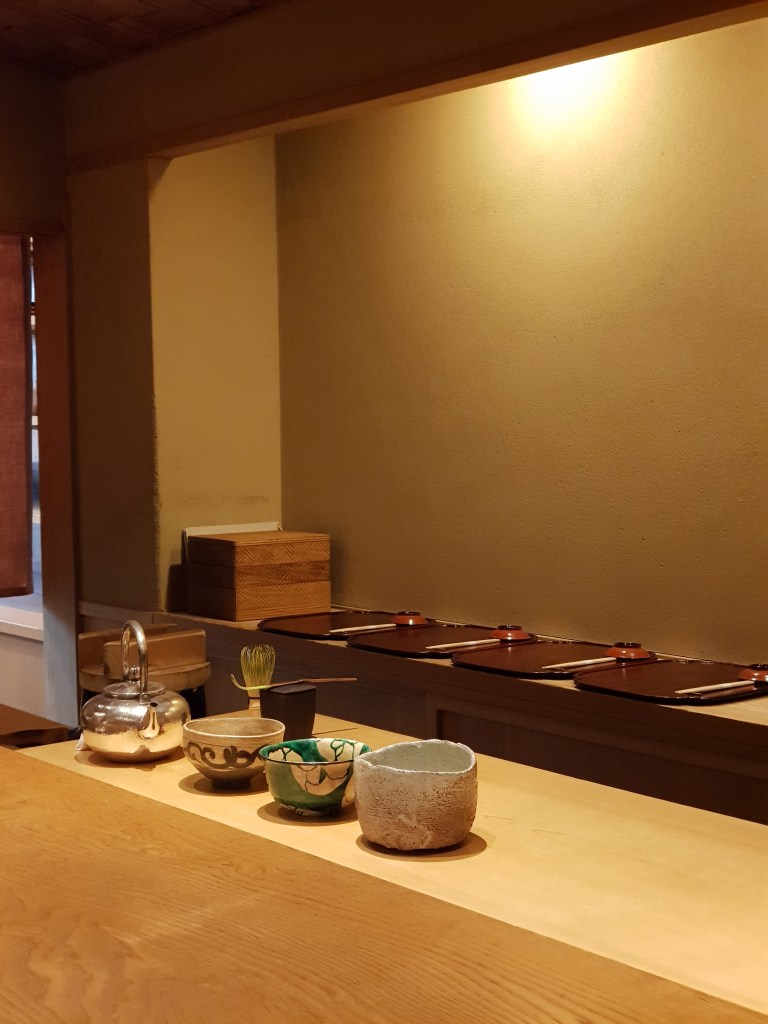
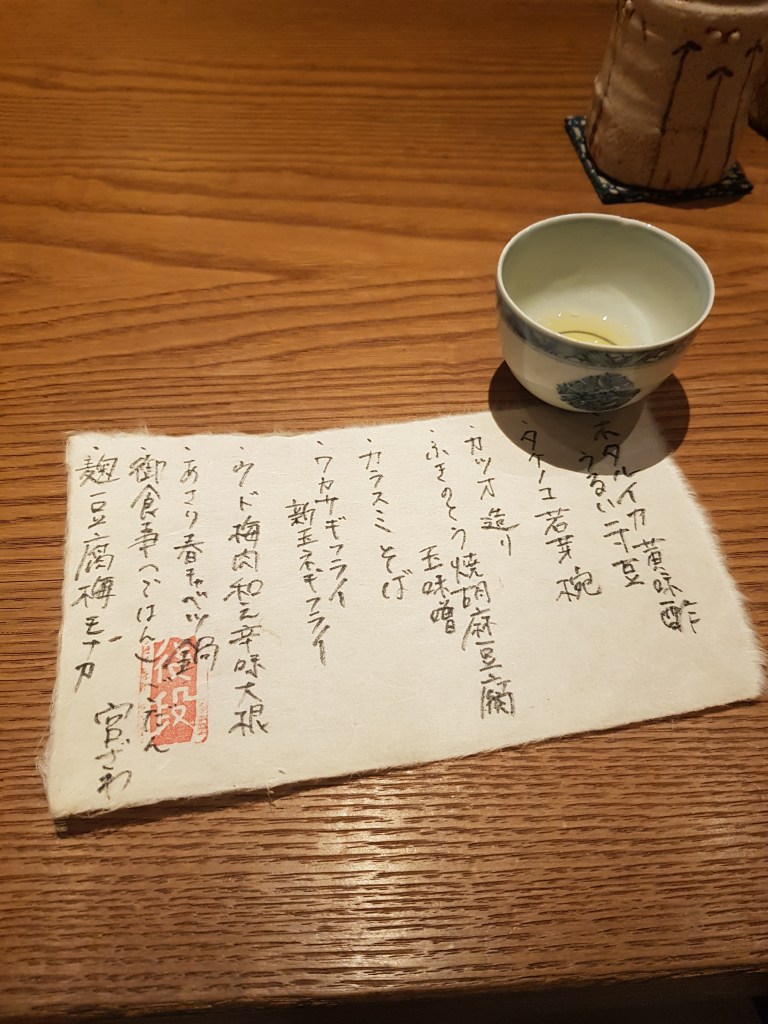
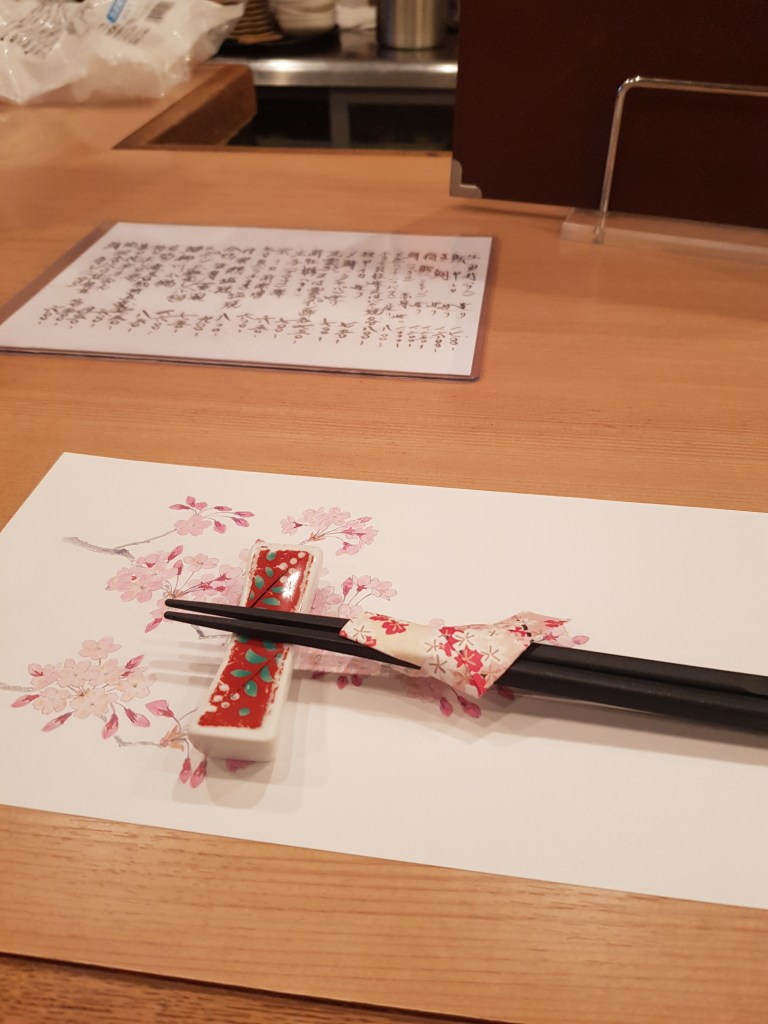
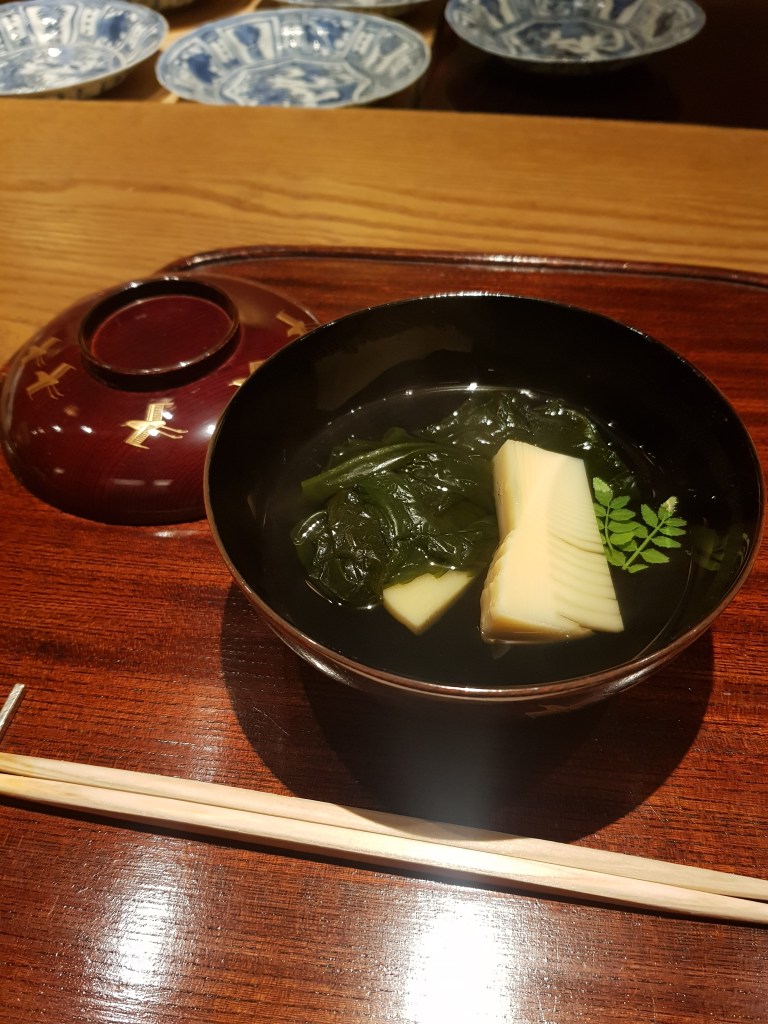
One of my main itineraries was to eat Kaiseki 懐石 in Kyoto, and I just googled to find a random place that was available on Saturday . It was a rainy evening and I had a hard time squinting around the little signboards looking for the place. I finally found the restaurant’s nondescript sign ごだん宮ざわ. It is a small shop that sits 7 or 8 people in front of the chefs (and a private area for a group somewhere) as they prepared one gastronomic course after the other. This was where my Japanese was sorely tested. When it comes to haute cuisine, even the English produce names, cooking methods and the background of the dish are hard to remember. So when the chefs explained the dishes to me in Japanese, I was struggling, feeling the frustration of not knowing the language well enough. The sous chef did help by explaining it to me in English, however, the story behind the food was lost (in translation). Anyway, I went there to savour the flavours of springtime (they prepare dishes based on what’s fresh on a particular season), and not to be the next Jonathan Gold, so I just relaxed and enjoyed the experience. I was (pardon my French) fucking blown away. The level of meticulous detail in each dish, the flow of flavours from the subtle to the sublime and back to the subtle, and even the ceramics and plating were carefully chosen. I got to chose my own cup for the aperitif and I was absolutely enamoured how they beautifully lined up everything for preparation and plating (see photo of Matcha preparation and the trays across from it). My favourite dish was the grilled sesame tofu with the house made egg miso (The miso was so outrageously good, I wanted to ask if I can bring some home with me) and for the last 御食事 (Goshokuji) of rice, they serve the rice first undercooked, with a variety of Japanese pickles and some variant of Furikake (?) and each time you ordered seconds (おかわり), the rice gets more cooked that lets you taste the different sweetness of the rice. I only did a second helping. I was stuffed. I was happy. For 12,000 yen, it was worth it. I talked to the sous chef most of the time, and I ask very politely if they are able to write down for me the menu for that evening, and he asked if I wanted it in English or Japanese, I asked for the Japanese version and in a few minutes, I was presented with the menu, written on a cloth-like texture that matches the look and feel of the restaurant (last photo). Again, I was just beyond words.
When I said my thanks and goodbyes, the sous chef walked with me to the door, I said to him it was my first time to eat Kaiseki like this and it is an absolutely unforgettable experience. He was beyond pleased. I asked how often does the menu change and he said, it changes everyday, especially if their regulars drop by (there were indeed regulars at that place, who were already making reservations for their next meal the following month). I told him I would definitely come back the next time I was in Kyoto and he said 是非 (zehi, a Japanese word that I would translate to By all means, please come back in this context). Post-dinner, I will know that this restaurant has a Michelin star.


てんぷら

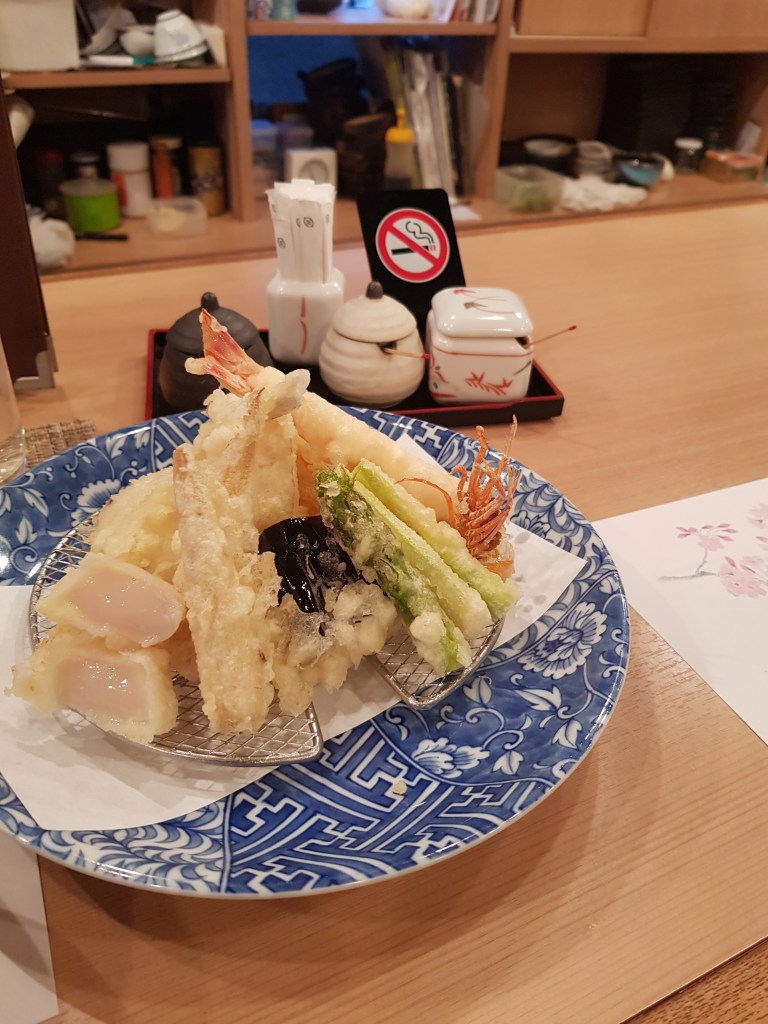
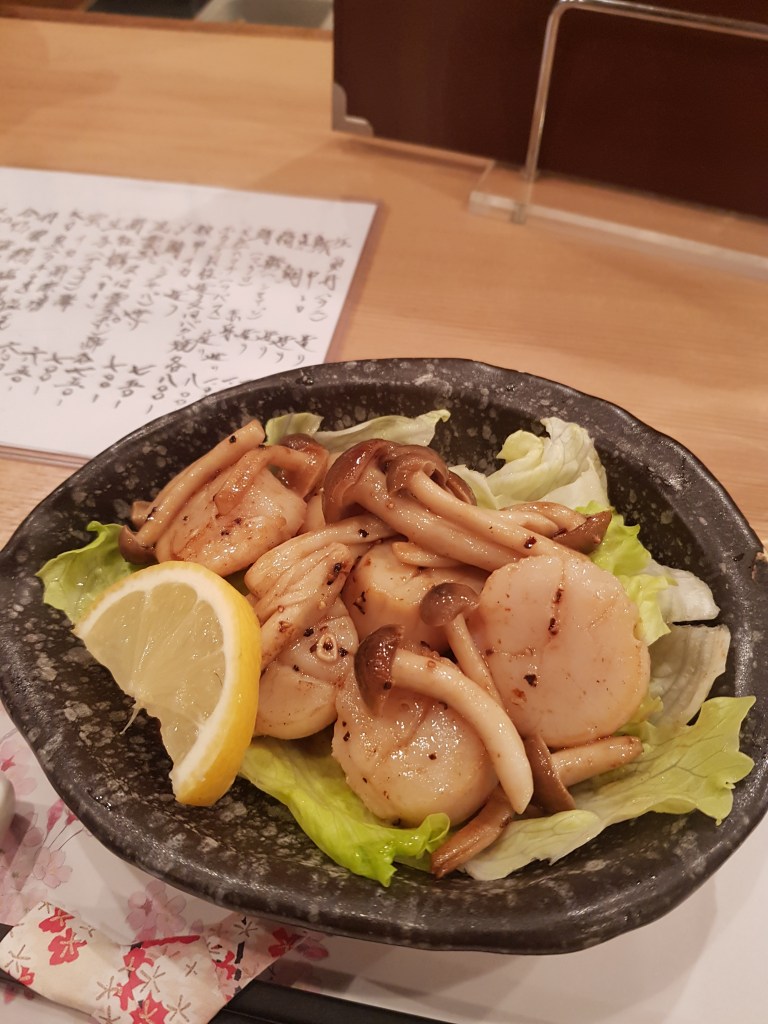
I couldn’t leave without trying Tempura from the little shop that caught my eye near my hotel. I had grilled scallops and a Tempura Moriawase 盛り合わせ (a variety of tempura). A wonderful close to my trip.

絶対にまた京都に行く。
I will most definitely return to Kyoto.
Sights of Kyoto, Spring 2020

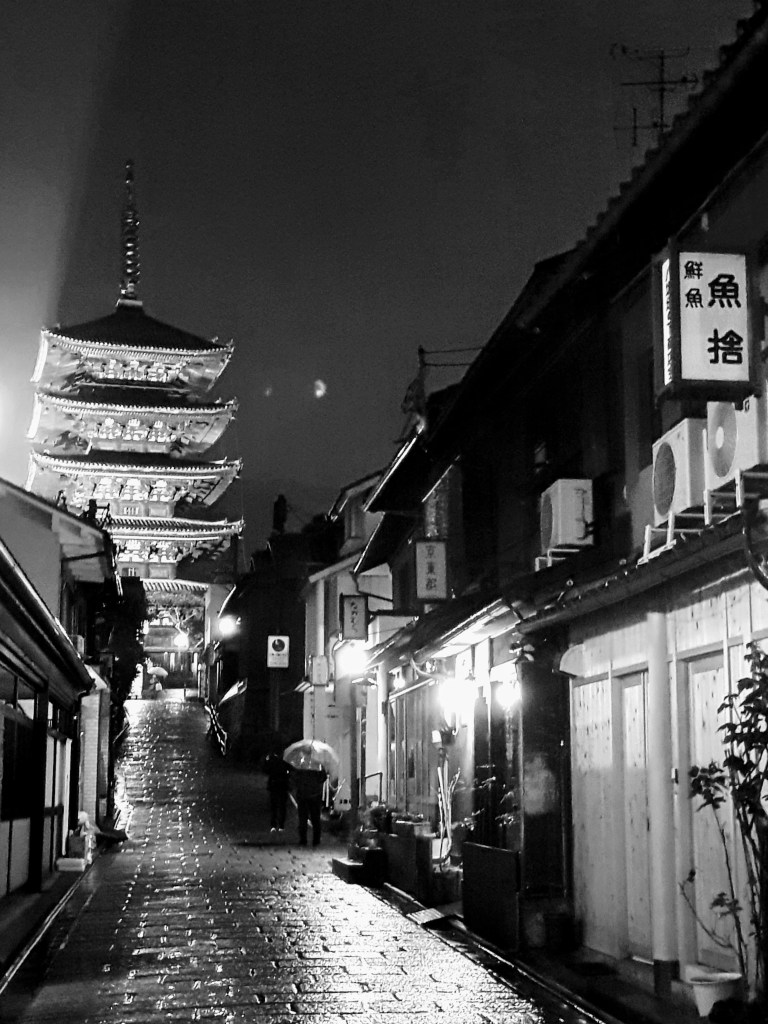
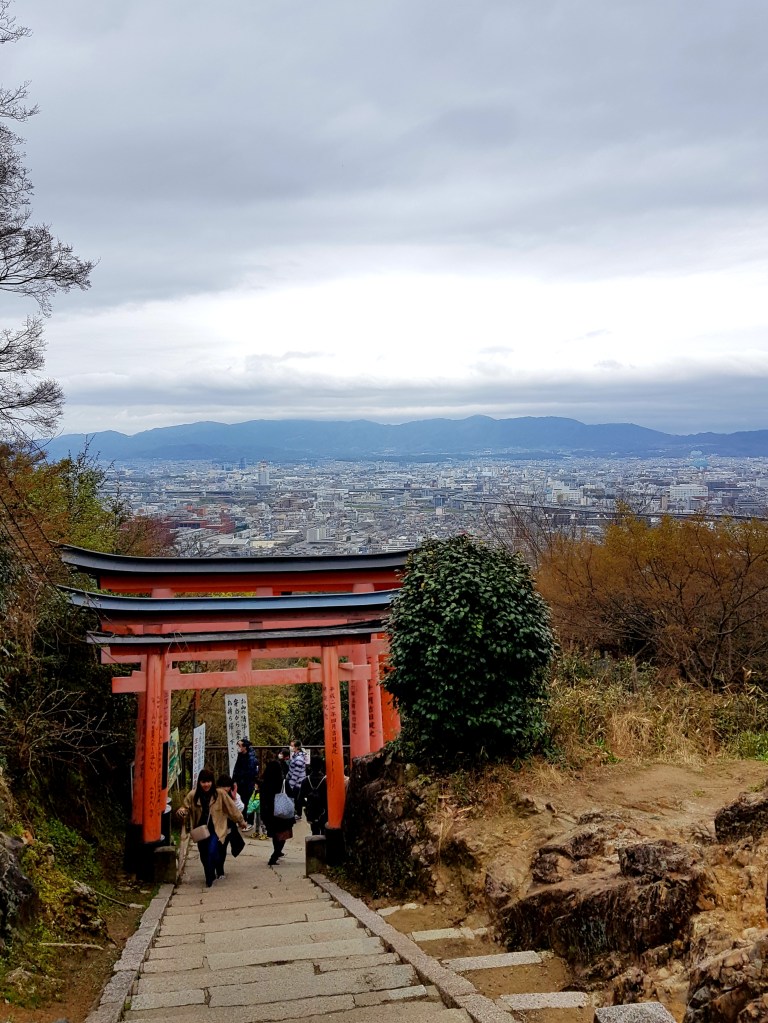
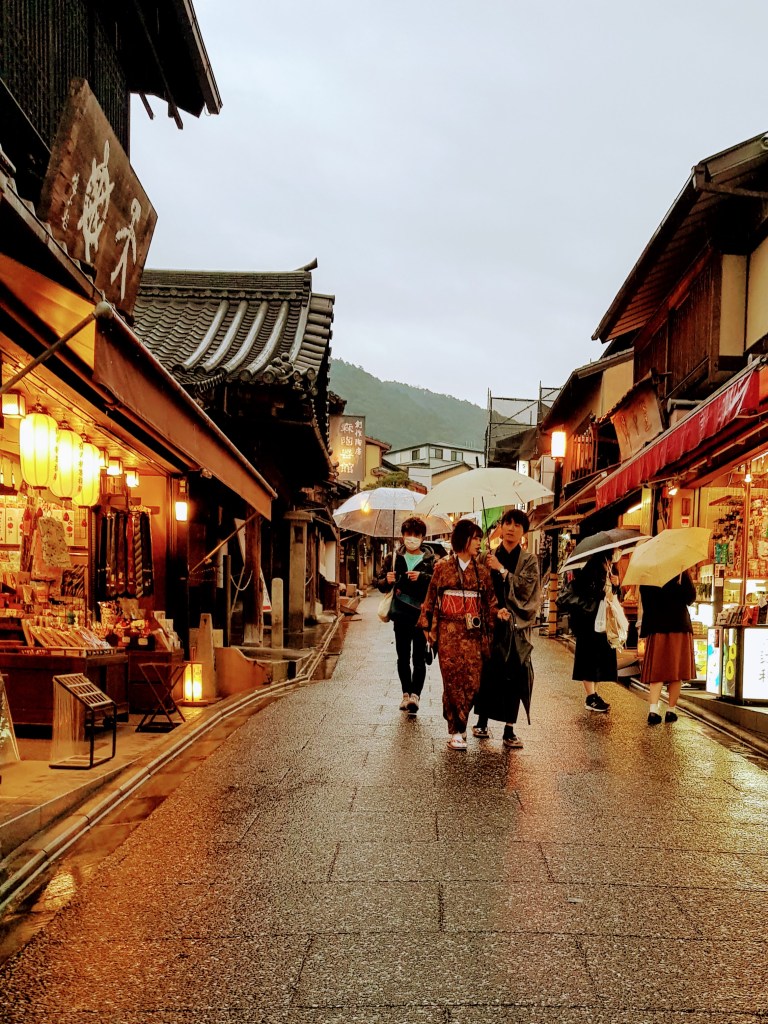
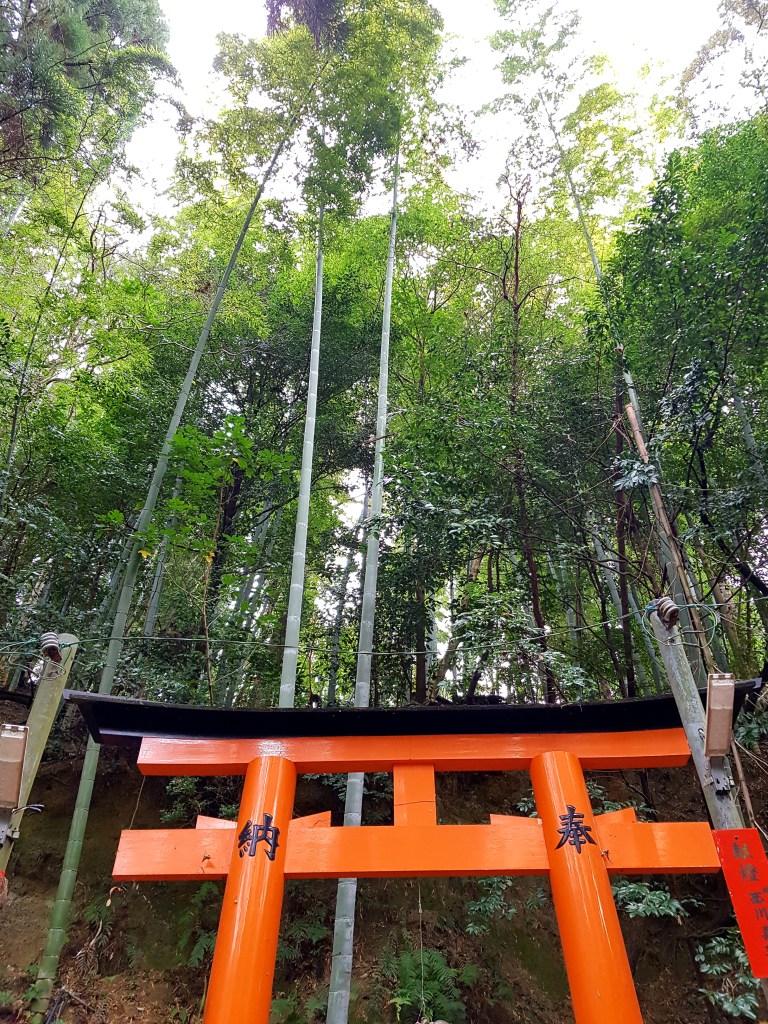
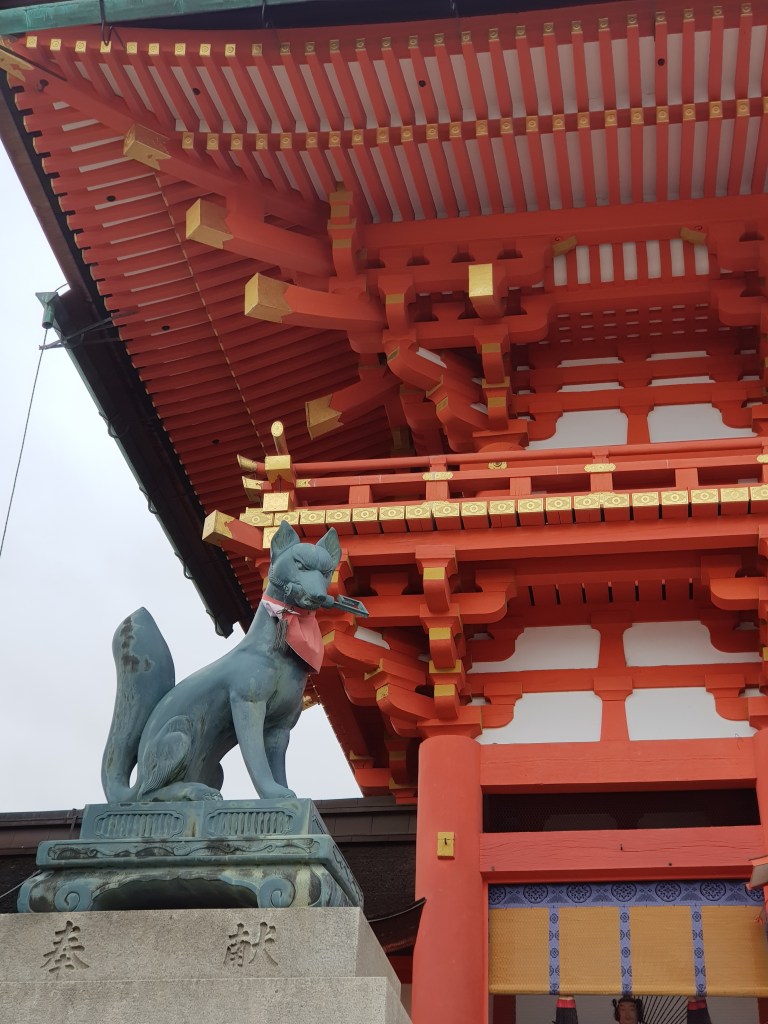
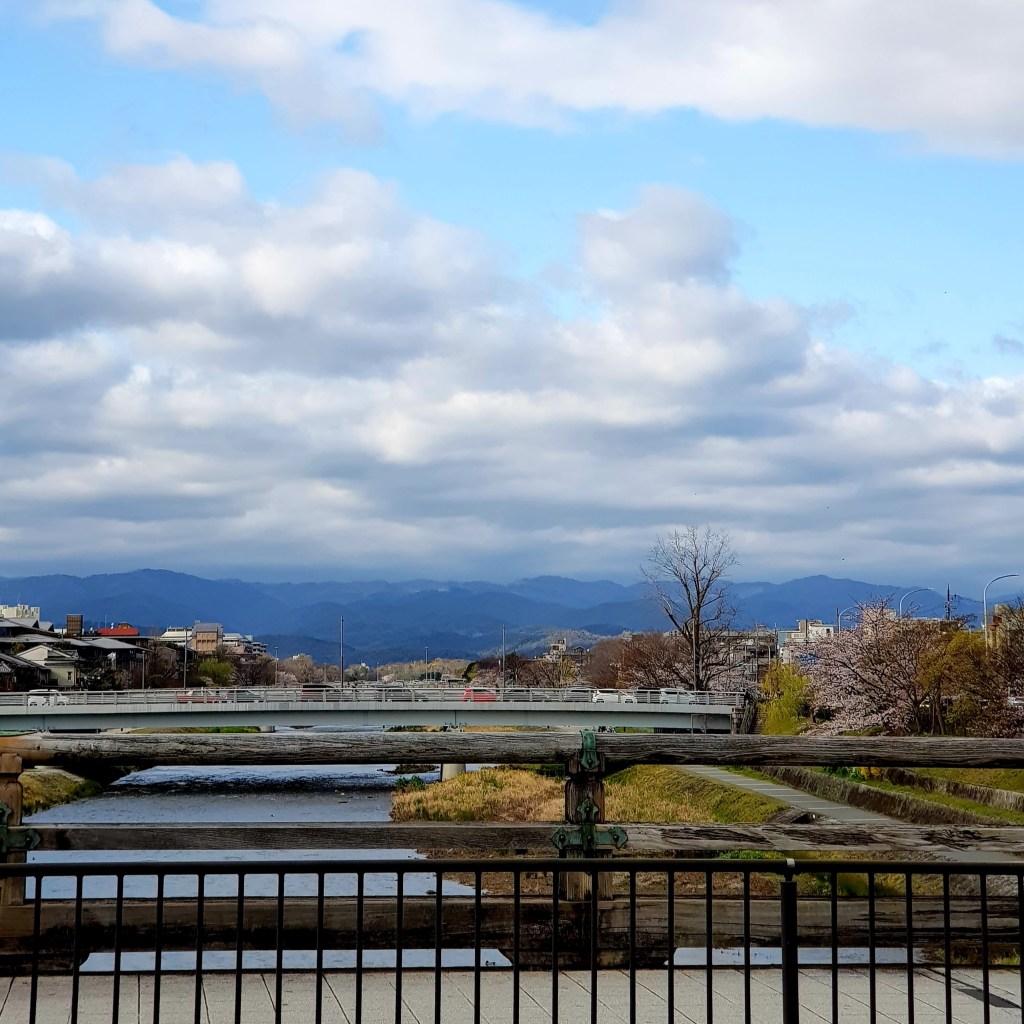
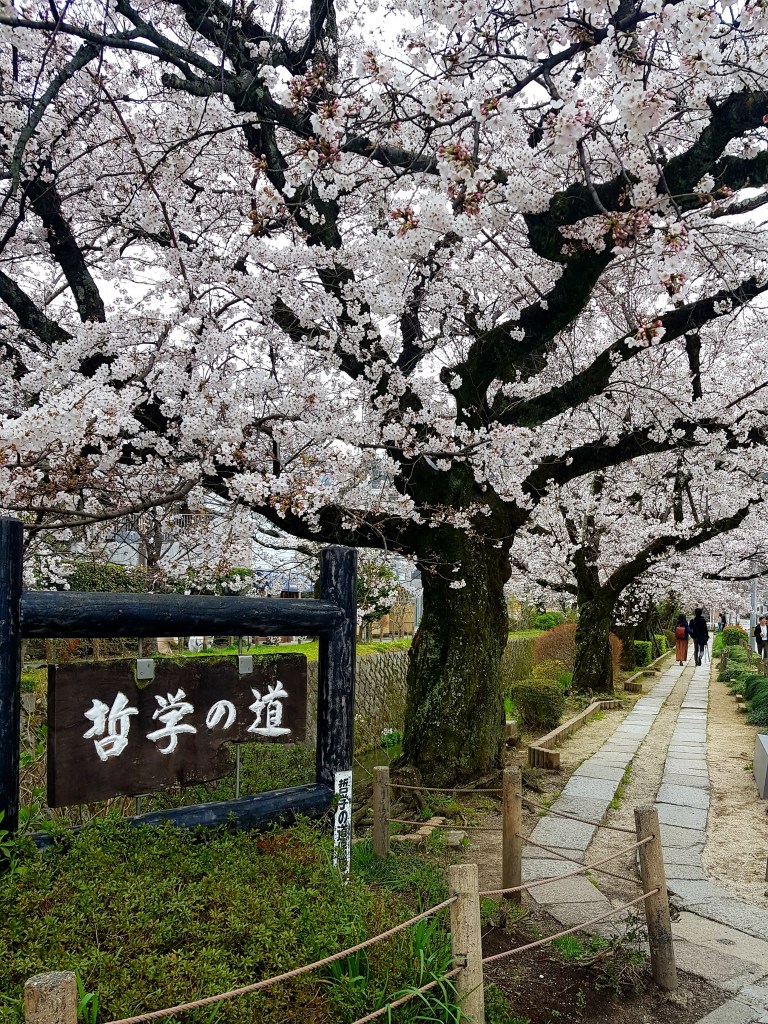
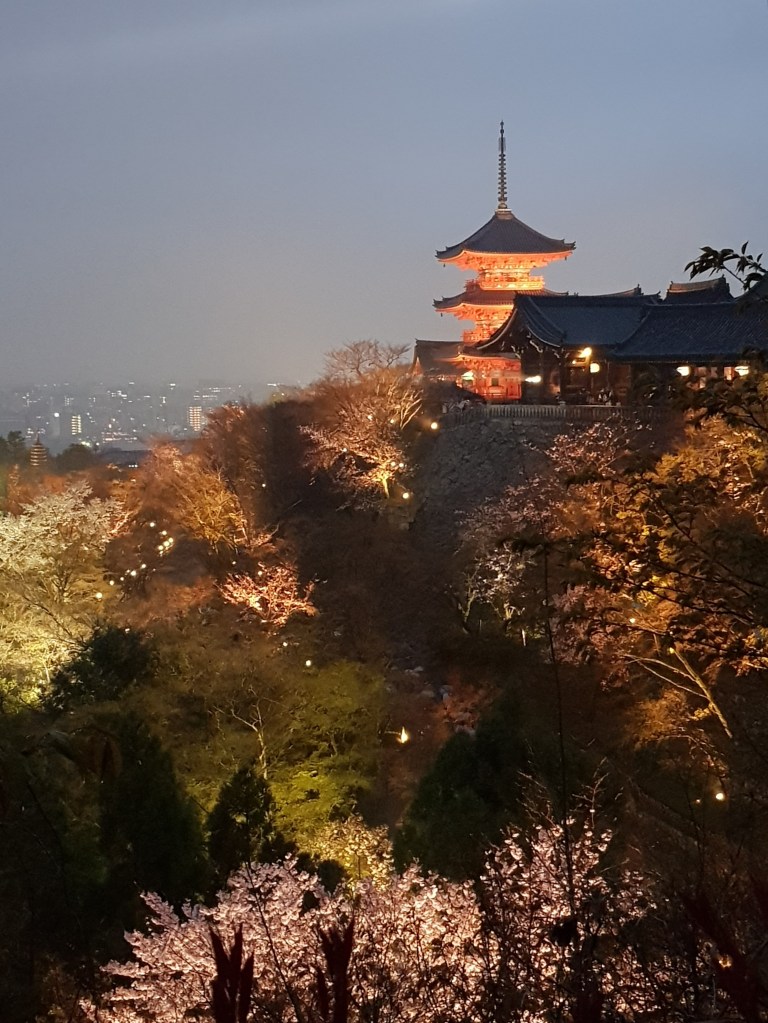
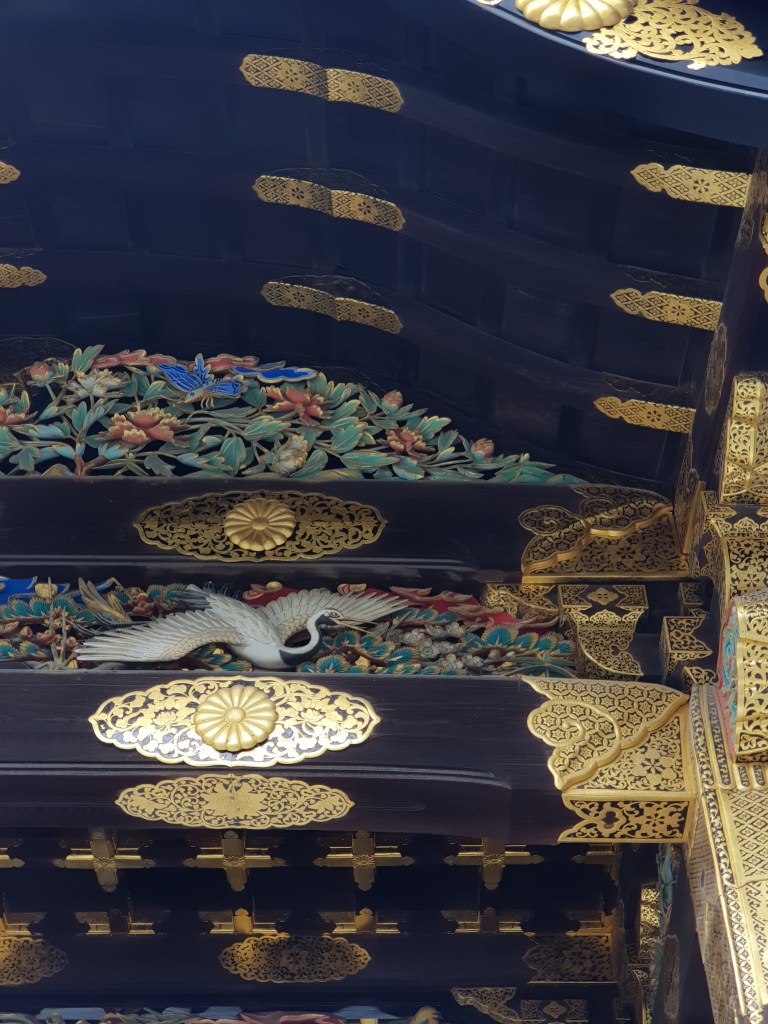
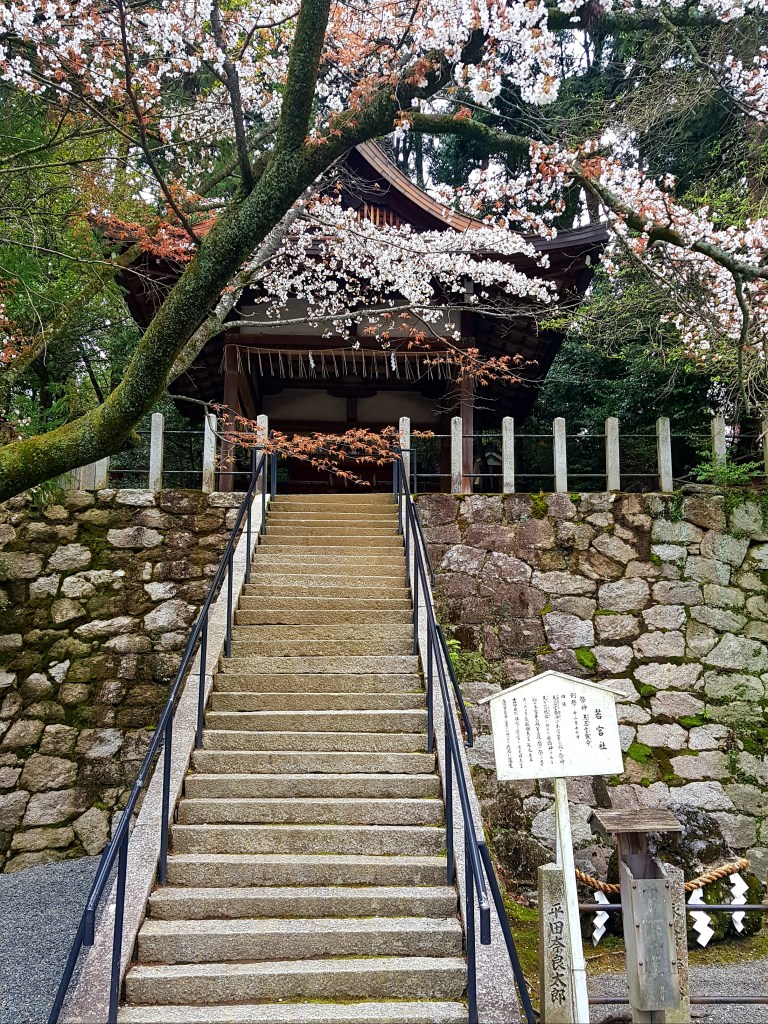
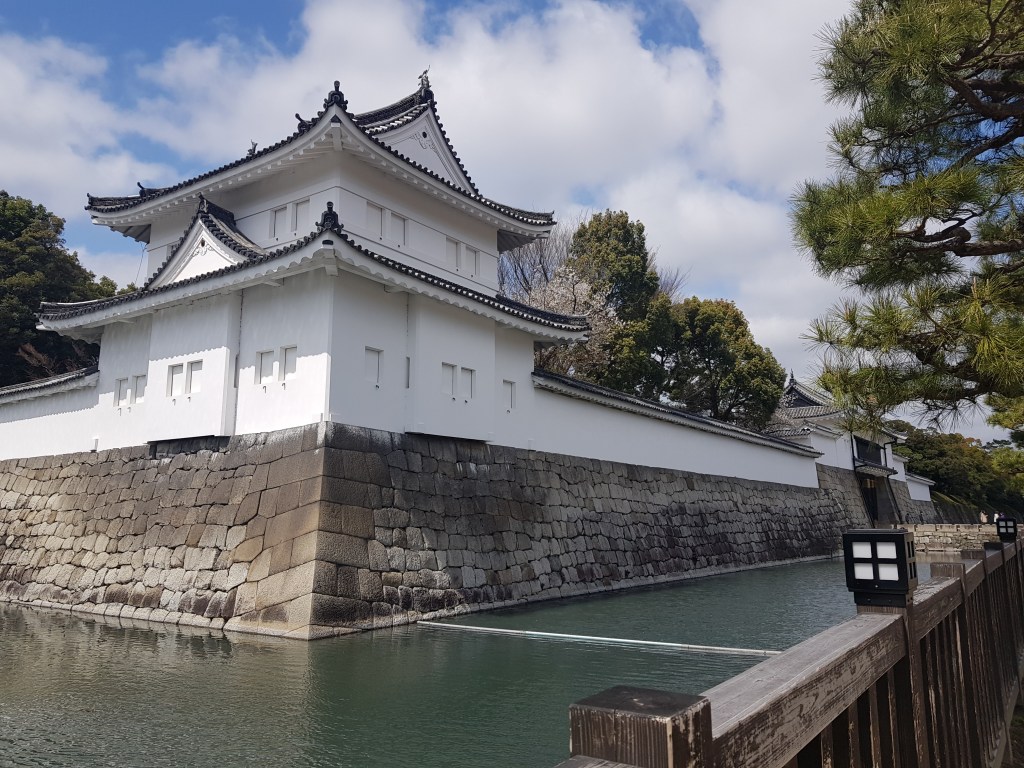
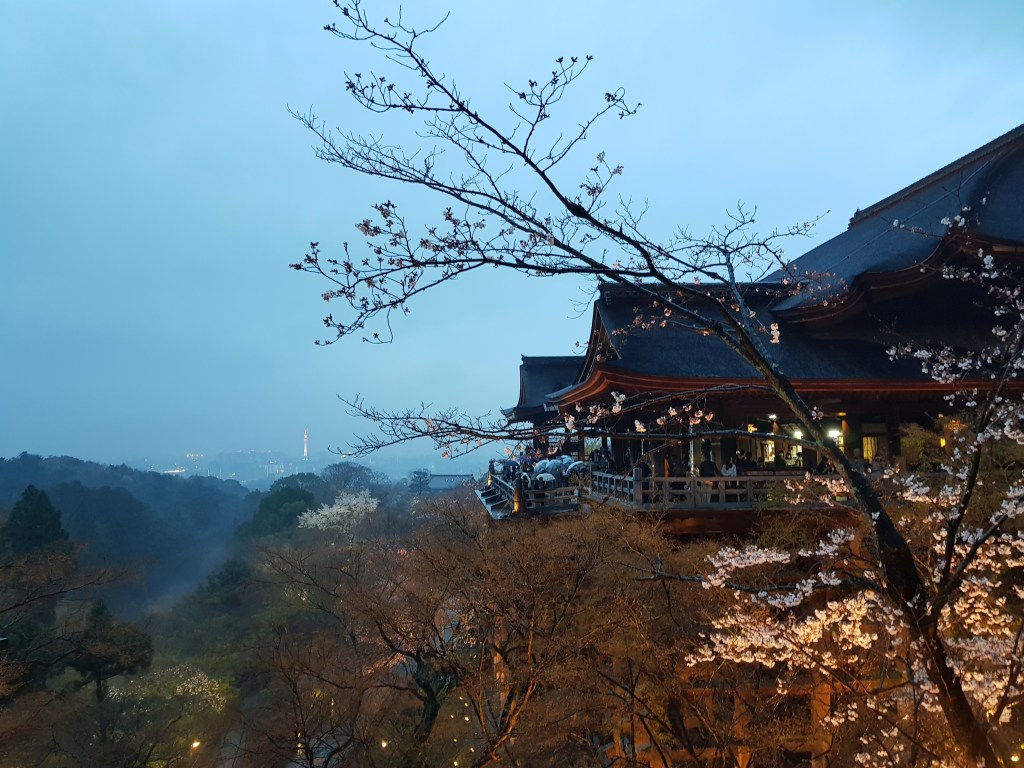
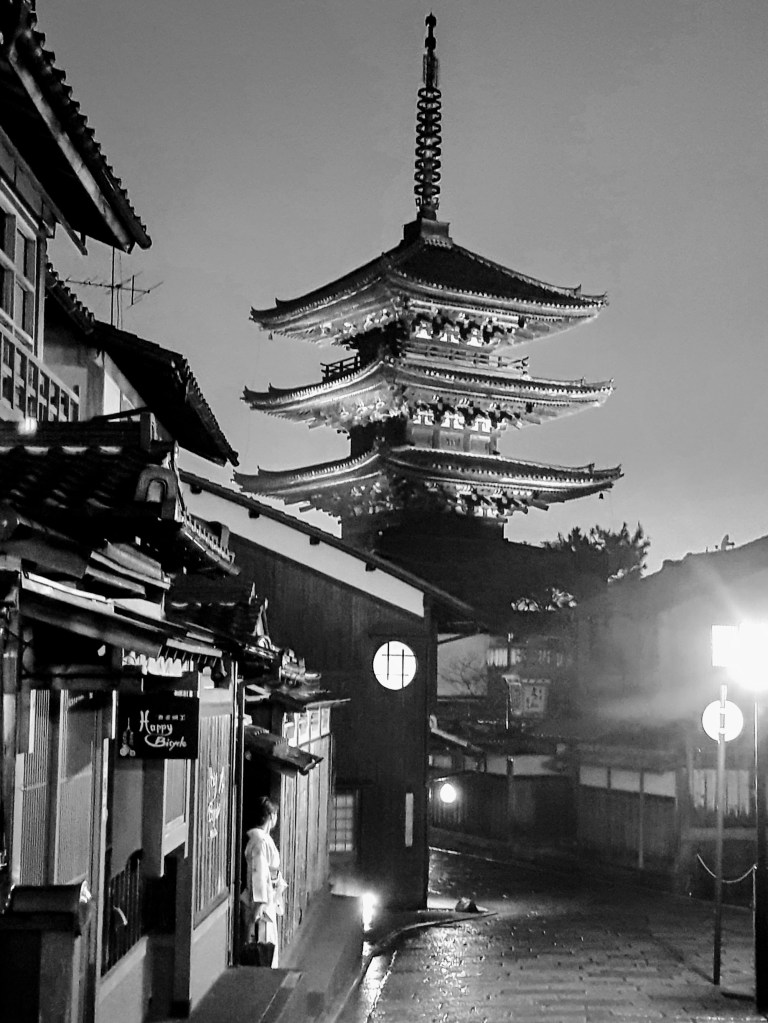
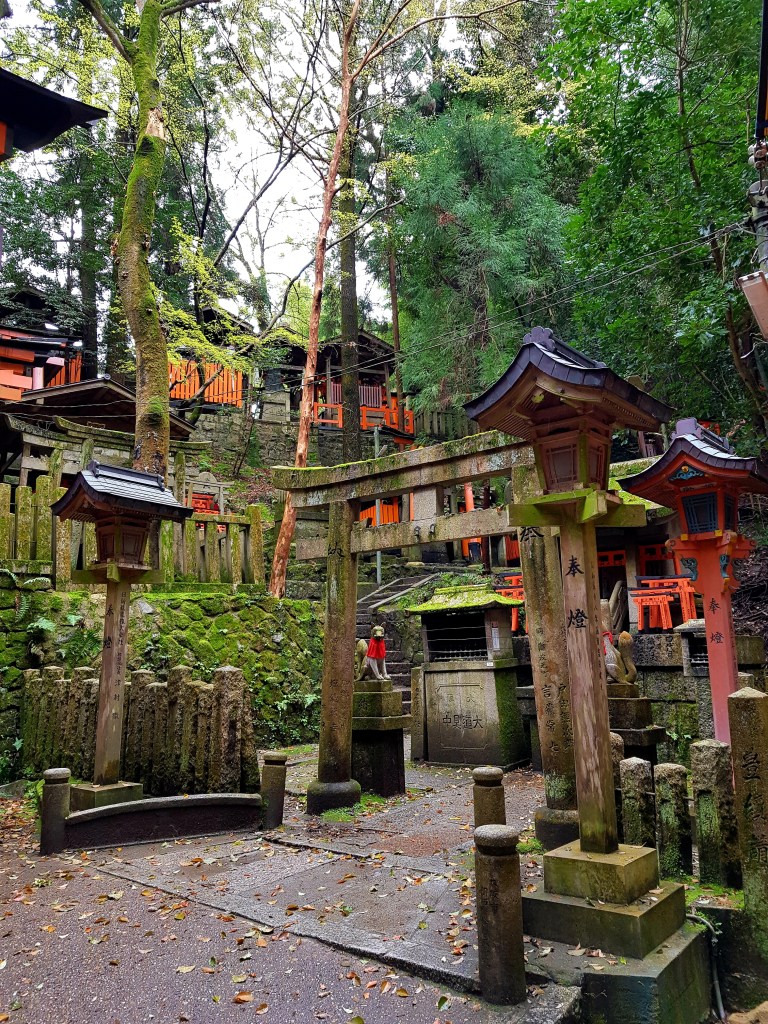
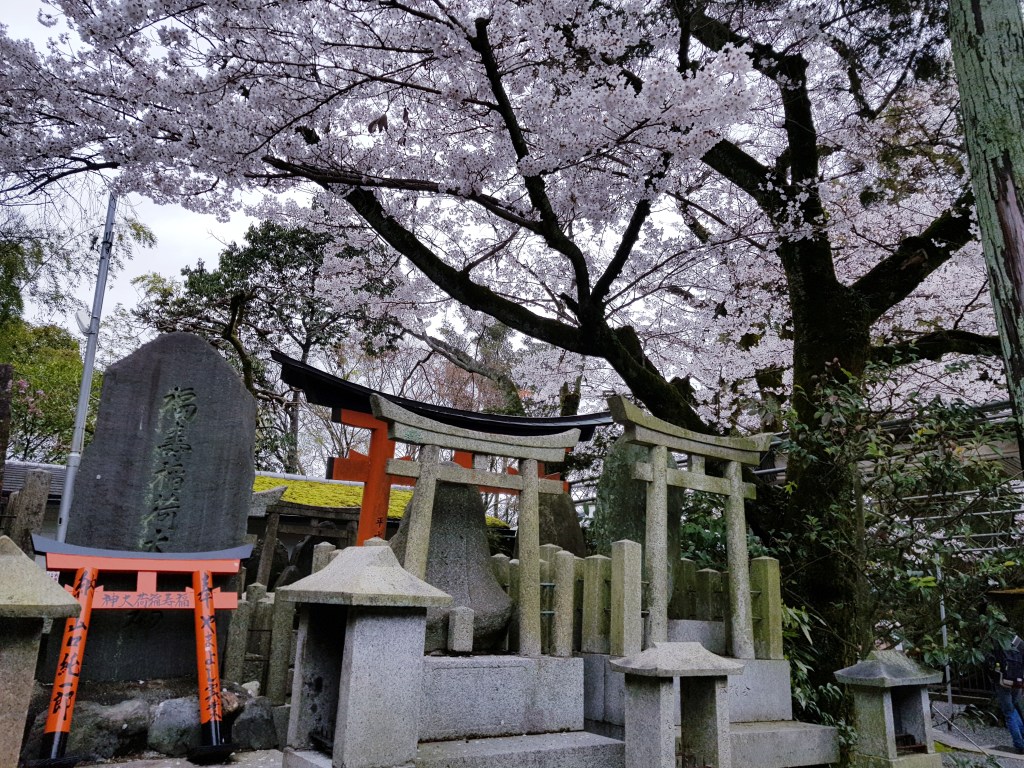
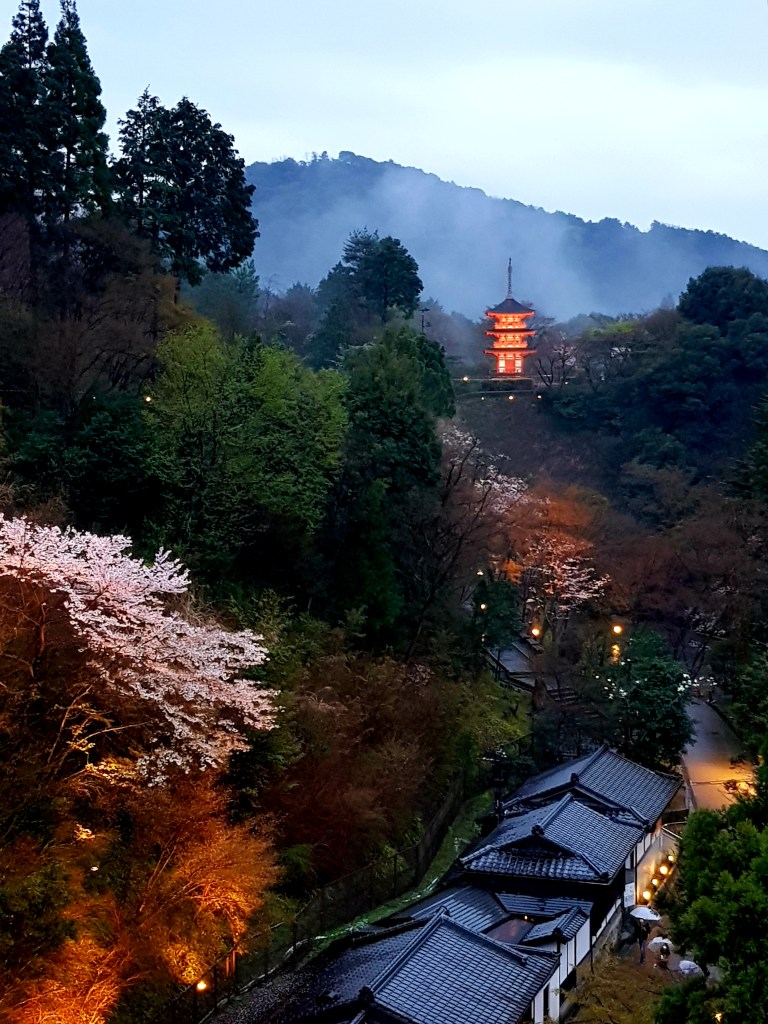
I was being daft and decided to escape the Tokyo quarantine weekend to go to one of my favourite places in Japan, Kyoto. It was Sakura season, so I was lucky to see some marvellous views and walked aplenty. I cleared about 54,000 steps for this 3 day trip making the sprain on my foot worse that high grade prescription painkillers didn’t do anything anymore. Nevertheless, I was able to visit Kiyomizu-dera (清水寺) to see Guanyin 観音, the Goddess of Mercy and look at the evening views, hiked to the top of Fushimi-inari Taisha (伏見稲荷大社), walked along the Philosopher’s Path (哲学の道) and went to see the beautiful Nijo Castle (二条城).
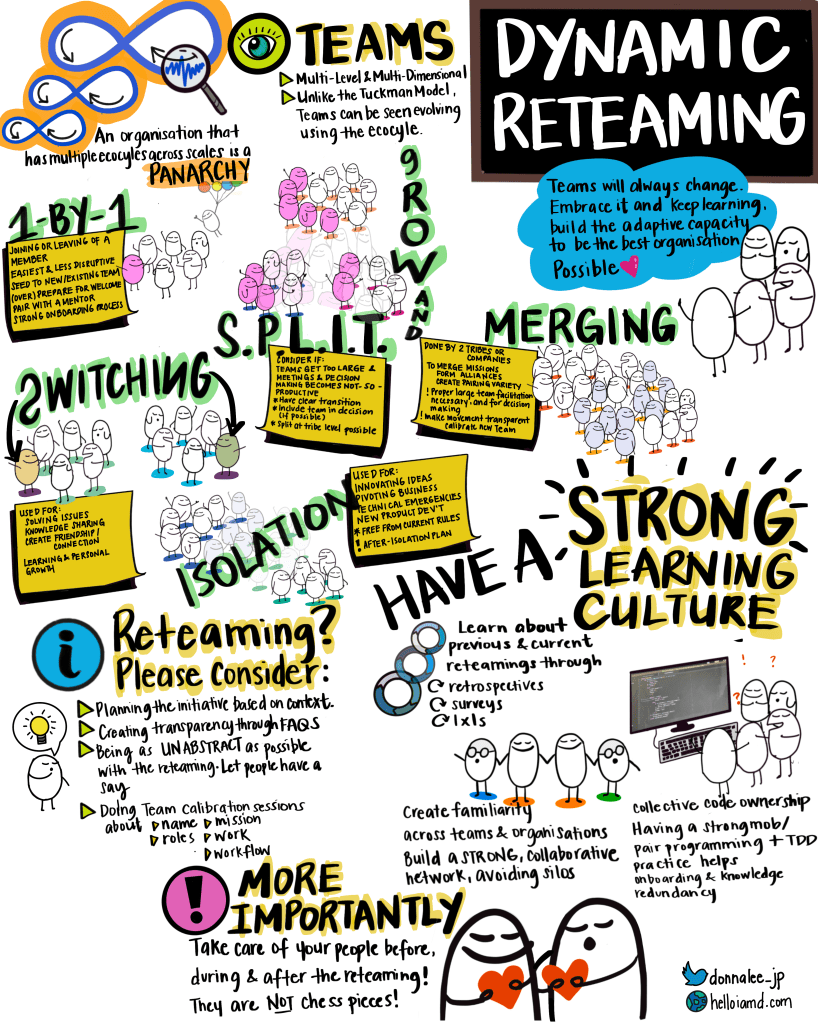
Kyoto for me exudes this air of quiet, dignified grace. Everything about it is elegant and minimal, classy and oh-so refined. If you notice closely, even the signboards for popular shops like Family Mart or Matsuya is understated. But the people are surprisingly funny. Not as crazy as their wild and vibrant neighbour, Osaka, but still, I keep forgetting how Kansai people are all about fun, in their own unique ways.

With the on-going pandemic, most of the places I went were close to empty except for the locals. Unlike the last time I was here in the Autumn of 2016, there was not a tour bus in sight, and the throng of Chinese tourists have vanished . It was quite disconcerting for me to see, and I saw it take a toll dearly on the shops trying to keep their business alive. I did the best I could to pump a little money into the economy.

All in all, it was a great trip. Kyoto has always been close to my heart. Every time I step out of the Shinkansen I would play Air’s Alone in Kyoto (which was quite apt as I travelled alone this time to Kyoto). I was able to talk to some locals in Japanese, a personal must-do when I travel around the country. I still have a problem asking questions and the Kansai dialect is still unfamiliar, but I’ll keep trying.

Some snaps from the trip. The food deserves an entirely different post.

A Series of Liberating Structures – Part 1

Featured Photo by Alex Rosario on Unsplash

This is will be a series on using facilitation on various ceremonies using Liberating Structures.

Recently, I was given the opportunity to facilitate a workshop for two companies that wanted to find initiatives to collaborate with each other.

Even though they belonged to the same group of companies, working independently, each one is its own entity with its own rules and regulations.

Preparation

image from liberating structures

This is the first time they would be meeting in a more intimate set up to work closer together, so preparing the environment and activities that will make them feel comfortable was absolutely essential.

With that goal in mind, I decided to forego the usual ideation and brainstorming meetings and decided to try the activities presented in Liberating Structures.

It was a huge challenge for me!

I had never used Liberating Structures before, and it was also my first time facilitating such a high stakes event where the participants are all senior leaders. Even our COO would be present!

We had only three hours for this session, to come up with the desired outcome.

After some experimentation and exploration, I settled on this structure for this high stakes session.  [ Items marked with * are from Liberating Structures ]

Impromptu Networking*

image from liberating structures

Impromptu Networking is the first activity I chose for the workshop. There are several considerations for this:

First,  I feel it is important to have each participant consider why they were there, what they could contribute, and what value they wanted to get out of it. 

It’s more comfortable to talk to someone one on one than to start as a group. You are able to connect to 3 people immediately in a span of 10 minutes.

Facilitator Notes: We had an almost equal number of participants from both entities. So I explained that the participants should pair up with another entity (not from the same company), or it would be a little silly!

Gathering of Ideas

Now that the participants are more comfortable with each other, I let them sit in groups (which they converged naturally) to start formulating ideas in preparation for

Open Space Technology 

Liberating Structures European Learning Gathering ...
image from liberating structures

There were two main themes of the workshop: Technology; and PPC [People, Process, and Culture]

After the ideation phase, I explained the concept of Open Space Technology. Each theme/marketplace should have a volunteer facilitator and the audience can move from either space freely.

I also explained the Law of Two Feet to all participants.

While the discussion is on-going to fine-grain the ideas generated, I asked them to place them on the [Action Priority] matrix to have a rough estimate on the priority and how complex the initiatives would be.

Facilitator Notes: Some participants chose to stick to the same marketplace all throughout the Two of them were on the side watching both groups and when I asked them if they had any concerns, they were just torn which marketplace they would like to be in, I suggested they can split and come back to share what they have learned.

Wrap-up and Closing: Feedback Wall

After we closed the marketplace, each facilitator explained the summary of gathered ideas, and I wrote the keywords on the board. I asked them to kindly write their feedback and place it on the wall.

We ended the session with a group picture of all the smiling faces!

Lessons Learnt 

Indeed, the risk of using something new certainly paid off. Not only did they formulate the initial ideas for collaboration, everyone was engaged and having fun doing so. The feedback they left was all I could hope for as a facilitator:  
  • great organization and support for communication
  • well-structured
  • excellent facilitation
  • efficient, dynamic and engaging
  • Opened their eyes to new ideas
  • Next session, please!

Liberating Structures so far have certainly helped me as a facilitator to unleash the creative potential of the people. Having used only 3 out of the 30-something structures, I can’t wait to see what the other activities can do.
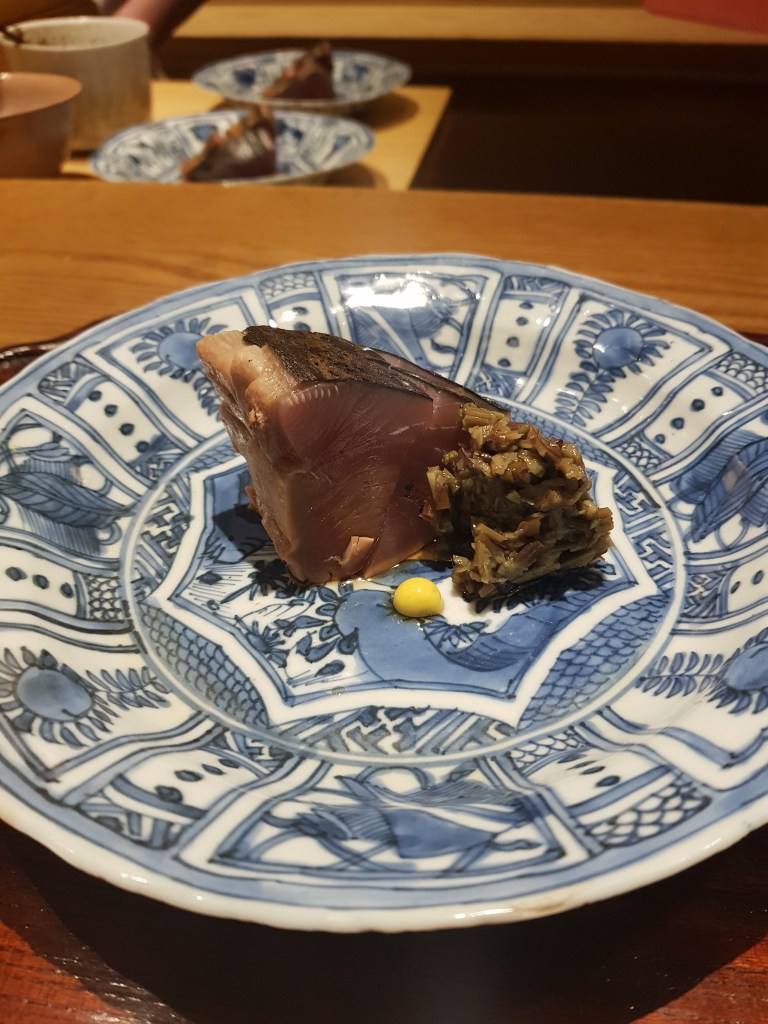
image from liberating structures